

Date
- Date
- 26th Dec 1986
Time
- Time
- ...

Padma Shri
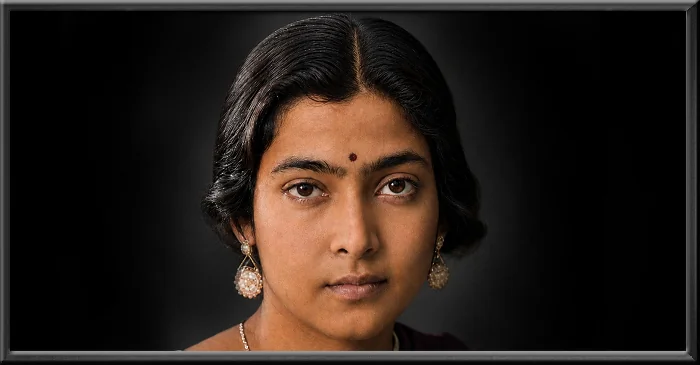
Bina Das
Bina Das – an Indian freedom fighteress, revolutionary, nationalist and teacheress.
She attempted to assassinate Bengal Governor Stanley Jackson with a revolver during the Calcutta University convocation.
She refused the freedom fighters’ pension and later lived in extreme poverty.
Recipient of the Padma Shri.
Bina Das
Bina Das was an Indian freedom fighter, revolutionary, nationalist and teacher who became one of the prominent women revolutionaries of Bengal during the Indian independence movement. She is particularly remembered for attempting to assassinate Bengal Governor Sir Stanley Jackson during the University of Calcutta convocation in 1932.
Born on 24 August 1911 in Krishnanagar in the Bengal Presidency, Bina Das grew up in a family closely associated with education, social reform and the nationalist movement. Her parents, Beni Madhab Das and Sarala Devi, were educationists and social workers associated with the Brahmo Samaj. Her father was also known for influencing young students, including Subhas Chandra Bose.
Early Life and Revolutionary Activities
Bina Das studied at Bethune College in Calcutta and became increasingly involved in anti-British activities during her student years.
She participated in student protests against the Simon Commission and became associated with the Chhatri Sangha, a semi-revolutionary organisation of women students in Bengal. The organisation provided women with political training and basic self-defence and became an important channel for young women entering the revolutionary movement.
Her elder sister Kalyani Das was also associated with the organisation.
Bina's political thinking was strongly shaped by the nationalist atmosphere surrounding her family and by revolutionary ideas circulating among students in Bengal.
Attempt to Assassinate Bengal Governor Stanley Jackson
The defining event of Bina Das's revolutionary career took place on 6 February 1932.
Bengal Governor Sir Stanley Jackson, a former England cricket captain who had entered colonial administration, was attending the convocation of the University of Calcutta.
Bina Das entered the ceremony carrying a revolver and fired five shots at Jackson at close range. None of the bullets struck the Governor, and she was overpowered and arrested. The weapon had been obtained with the assistance of revolutionary Kamala Dasgupta.
Her act was intended as a political protest against British colonial rule rather than as a personal attack on Jackson.
Following her arrest, Das was tried and sentenced to nine years of rigorous imprisonment.
Imprisonment and Continued Freedom Struggle
Bina Das was released early in 1939, but imprisonment did not end her political activities.
She subsequently joined the Indian National Congress and remained involved in the national movement. When the Quit India Movement began in 1942, she participated in the campaign against British rule and was imprisoned again.
She remained incarcerated from 1942 until 1945.
Her political career later extended into representative government. She served as a member of the Bengal Provincial Legislative Assembly from 1946 to 1947 and subsequently as a member of the West Bengal Legislative Assembly from 1947 to 1951.
In 1947, she married fellow revolutionary Jatish Chandra Bhaumik, who had been associated with the Jugantar revolutionary movement.
Bina Das as a Teacher
In her later years, Bina Das took up teaching as a profession.
She taught English at a girls' school in South Calcutta. Her professional career, however, was affected by the fact that the British authorities had withheld her university graduation certificate because of her revolutionary activities.
The degree that had been denied to her during British rule would eventually be restored decades after her death.
Padma Shri
In 1960, the Government of India awarded Bina Das the Padma Shri for her contribution to social work.
The Padma Awards records officially list Smt. Bina Das of West Bengal among the Padma Shri recipients of 1960 under the Social Work category.
Despite receiving one of India's major civilian honours, her later life was marked by relative obscurity.
Refusal of Freedom Fighters' Pension
Bina Das is also reported to have refused the pension offered to freedom fighters.
Accounts of her later life state that she did not wish to receive financial benefit for what she considered her duty towards the country. She subsequently moved away from Kolkata and spent her final years in northern India.
Her life after independence stands in sharp contrast to the recognition she had once received for her role in the freedom struggle.
Final Years and Death of Bina Das
The circumstances surrounding Bina Das's death remain unusually tragic and are not recorded identically in every account.
The date 26 December 1986 is commonly given as her date of death. Several published accounts state that a partially decomposed body was discovered near a roadside in Rishikesh and that authorities required weeks to establish that it was Bina Das. The Indian Express reports that her body was recovered in Rishikesh in December 1986 and took authorities weeks to identify.
An academic account from the International Institute for Asian Studies confirms that Bina Das travelled to Varanasi, Haridwar and Rishikesh in 1986 after the death of her husband and that her body was subsequently found on the road to Rishikesh and identified by relatives.
However, an alternative account attributed to her relatives states that she was found unconscious at a bus stand, taken to a hospital by police and died the following day.
Because the circumstances are not completely uniform across surviving accounts, 26 December 1986 is best treated as the commonly recorded date associated with her death and the discovery of her body rather than presented as an indisputably established moment of death.
Posthumous Graduation Degree
One of the most symbolic recognitions of Bina Das came decades after her death.
Because of her revolutionary activities, British authorities had withheld the university degree she had earned. In 2012, the University of Calcutta posthumously awarded Bina Das her Bachelor of Arts degree with Honours in English, approximately eight decades after it had been denied to her.
The university also posthumously honoured fellow revolutionary Pritilata Waddedar, whose degree had similarly been withheld during British rule.
Legacy of Bina Das
Bina Das occupies an important place among the women revolutionaries of the Indian independence movement.
Her attempt on Stanley Jackson, years of imprisonment, participation in the Quit India Movement, legislative career and later work as a teacher reflected different phases of India's transition from colonial rule to independence.
Her life also illustrates the difficult fate experienced by some revolutionaries after independence. Although she received the Padma Shri, she reportedly rejected a freedom fighters' pension and spent her later years away from public attention.
Today, Bina Das is remembered not only for the five shots she fired at a colonial Governor, but for a lifetime shaped by nationalism, imprisonment, public service, education and an uncompromising commitment to India's freedom struggle.