

Date
- Date
- 29th Jul 1883
Time
- Time
- ...
First Marshal of the Empire
Benito Mussolini61
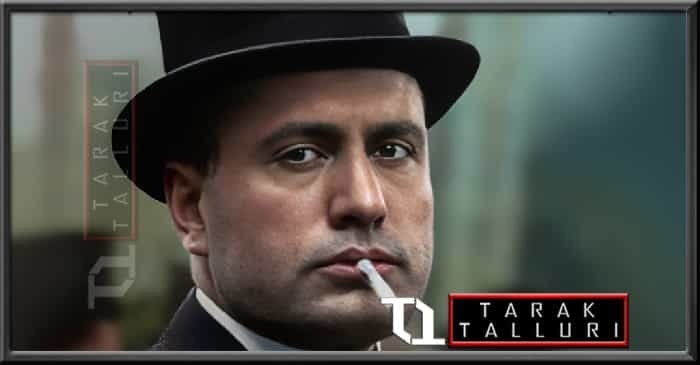
Benito Mussolini – an Italian politician, Duce.
Founder of Fascism.
Prime Minister of Italy.
Founder of the National Fascist Party.
He established a totalitarian state, suppressing opposition, controlling media, and promoting a cult of personality under the slogan "Il Duce" (The Leader).
Benito Mussolini – Biography, History, Fascism and World War II
Benito Mussolini (29 July 1883 – 28 April 1945) was an Italian politician, dictator, journalist, and founder of Italian Fascism. Known as Il Duce, meaning "The Leader," he served as Prime Minister of Italy from 1922 to 1943 and established a fascist dictatorship that fundamentally transformed Italian politics.
Mussolini founded the Italian Fascist movement in 1919, became leader of the National Fascist Party, and formed an alliance with Adolf Hitler's Nazi Germany. His expansionist policies, authoritarian government, and involvement in World War II had profound consequences for Italy and Europe.
Early Life and Birth of Benito Mussolini
Benito Amilcare Andrea Mussolini was born on 29 July 1883 in Dovia di Predappio, near Forlì, in the Kingdom of Italy.
His father, Alessandro Mussolini, was a blacksmith and socialist activist, while his mother, Rosa Maltoni, was a schoolteacher.
Mussolini grew up in a politically active household and developed an early interest in socialism and revolutionary politics.
He obtained a teaching diploma in 1901 and briefly worked as a schoolteacher before becoming involved in political journalism and socialist activism.
Benito Mussolini's Early Political Career
Mussolini initially supported revolutionary socialism and participated in the Italian socialist movement.
He became editor of Avanti!, the newspaper of the Italian Socialist Party, in 1912.
However, his political views changed during World War I.
While the Italian Socialist Party opposed participation in the war, Mussolini began advocating Italian military intervention.
His position resulted in his expulsion from the Socialist Party in 1914.
He subsequently established the newspaper Il Popolo d'Italia, which promoted interventionist nationalism.
Mussolini served in the Italian Army during World War I until he was wounded and discharged in 1917.
Founder of Italian Fascism
Benito Mussolini founded the Fascist movement in Milan on 23 March 1919.
The organization, known as the Fasci Italiani di Combattimento, emerged amid political instability, economic difficulties, and social unrest following World War I.
Fascism developed into an authoritarian nationalist ideology that rejected liberal parliamentary democracy, suppressed political opposition, and promoted centralized state power.
Mussolini's movement employed paramilitary squads known as the Blackshirts, whose violence and intimidation targeted socialists, trade unionists, and political opponents.
In 1921, the movement was reorganized into the National Fascist Party (Partito Nazionale Fascista).
March on Rome and Rise to Power
The March on Rome in October 1922 was a decisive turning point in Mussolini's political career.
Fascist supporters mobilized and threatened to seize political control during a period of instability.
Rather than authorize decisive resistance, King Victor Emmanuel III appointed Mussolini Prime Minister on 30 October 1922.
Mussolini initially headed a coalition government, but he progressively dismantled Italy's democratic institutions.
By 1925–1926, his government had established an authoritarian one-party dictatorship.
Mussolini as Dictator of Italy
Mussolini adopted the title Il Duce and concentrated political authority in his government.
His regime imposed press censorship, restricted political freedoms, suppressed opposition parties, and expanded state surveillance.
Fascist propaganda presented Mussolini as the embodiment of Italian national strength.
The government promoted militarism, nationalism, centralized economic control, and obedience to the state.
Political opponents faced imprisonment, exile, intimidation, or violence.
The regime also established organizations intended to shape education, youth activities, and public life according to Fascist ideology.
Benito Mussolini and the Lateran Treaty
One important event during Mussolini's rule was the signing of the Lateran Treaty on 11 February 1929.
The agreements between Italy and the Holy See resolved the longstanding Roman Question concerning the political status of the papacy following Italian unification.
They recognized Vatican City as an independent sovereign state and established a new relationship between the Italian government and the Catholic Church.
The settlement strengthened Mussolini's domestic political position.
Mussolini's Invasion of Ethiopia
Mussolini pursued an aggressive foreign policy intended to expand Italy's colonial empire.
In October 1935, Fascist Italy invaded Ethiopia, then commonly known internationally as Abyssinia.
The invasion resulted in widespread destruction and serious violations of international humanitarian norms, including the use of chemical weapons by Italian forces.
Italian forces captured Addis Ababa in May 1936, and Mussolini proclaimed the creation of an Italian empire.
The invasion provoked international condemnation and contributed to Italy's growing diplomatic isolation from several European powers.
Mussolini and Adolf Hitler
Mussolini developed an increasingly close political and military relationship with German dictator Adolf Hitler.
Although their movements had different origins and characteristics, both regimes promoted authoritarian nationalism, militarism, and the suppression of political opposition.
Their cooperation deepened during the 1930s.
In 1936, Mussolini and Hitler strengthened their political relationship through the Rome–Berlin Axis.
In May 1939, Italy and Germany signed the Pact of Steel, formalizing their military and political alliance.
Fascist Racial Laws of 1938
In 1938, Mussolini's government introduced antisemitic racial legislation that discriminated against Italian Jews.
These measures excluded Jewish people from important areas of public life, including education, government employment, and sections of the economy.
They also restricted marriages between Jewish and non-Jewish Italians.
The racial laws represented a major escalation of state-sponsored discrimination under Fascist rule.
Following Germany's occupation of much of Italy in 1943, Jews in occupied territories faced arrest and deportation during the Holocaust, with collaboration from authorities associated with the Italian Social Republic.
Benito Mussolini and World War II
World War II began in Europe in September 1939 when Germany invaded Poland.
Italy initially remained outside direct combat.
On 10 June 1940, Mussolini declared war on Britain and France, bringing Italy into World War II on the side of Nazi Germany.
His government sought territorial expansion in the Mediterranean, the Balkans, and Africa.
However, Italy experienced major military setbacks in Greece, North Africa, and other campaigns.
The prolonged conflict placed enormous pressure on the Italian economy, armed forces, and civilian population.
Mussolini's Fall from Power in 1943
By 1943, Italy's military defeats and worsening domestic conditions had undermined Mussolini's political authority.
Following the Allied invasion of Sicily, members of the Fascist Grand Council voted against his leadership.
On 25 July 1943, King Victor Emmanuel III dismissed Mussolini as Prime Minister.
He was arrested and placed in detention.
In September 1943, German forces rescued Mussolini and helped establish the Italian Social Republic in German-controlled northern Italy.
Mussolini became the head of this regime, which remained heavily dependent on Nazi Germany.
Death of Benito Mussolini
As Allied forces advanced through Italy in April 1945, the German-backed Italian Social Republic collapsed.
Mussolini attempted to escape toward Switzerland with his companion Clara Petacci and other fleeing Fascists.
Italian partisans captured them near Lake Como.
Benito Mussolini was executed by Italian partisans on 28 April 1945, near Giulino di Mezzegra, Italy.
He was 61 years old.
The bodies of Mussolini, Petacci, and other executed Fascists were subsequently displayed in Milan's Piazzale Loreto.
His death marked the final collapse of his personal dictatorship.
Major Historical Milestones
- 1883: Benito Mussolini was born on 29 July in Predappio, Italy.
- 1912: Became editor of the socialist newspaper Avanti!
- 1914: Broke with the Socialist Party over Italian participation in World War I.
- 1919: Founded the Italian Fascist movement.
- 1921: The National Fascist Party was established.
- 1922: Became Prime Minister following the March on Rome.
- 1925–1926: Consolidated a Fascist dictatorship.
- 1929: Signed the Lateran agreements with the Holy See.
- 1935: Ordered the invasion of Ethiopia.
- 1938: Introduced antisemitic racial laws.
- 1939: Signed the Pact of Steel with Nazi Germany.
- 1940: Entered World War II alongside Germany.
- 1943: Was removed from power and later headed the German-backed Italian Social Republic.
- 1945: Was executed by Italian partisans on 28 April.
Historical Significance of Benito Mussolini
Benito Mussolini was one of the central figures in the development of twentieth-century European fascism.
His political movement established a model of authoritarian government that influenced other far-right movements, including aspects of Hitler's Nazi movement.
The suppression of democratic institutions, political violence, propaganda, and aggressive nationalism under his leadership demonstrated the destructive consequences of fascist dictatorship.
Mussolini's colonial wars, discriminatory legislation, and alliance with Nazi Germany contributed to widespread suffering and ultimately to Italy's military defeat.
His career remains an important subject in the study of authoritarianism, fascism, political propaganda, and World War II.
Conclusion
Benito Mussolini, born on 29 July 1883 and executed on 28 April 1945, was the founder of Italian Fascism and the dictator who ruled Italy from 1922 to 1943.
His rise to power, establishment of authoritarian rule, military expansion, and alliance with Adolf Hitler profoundly influenced the history of Italy and Europe.
His legacy is associated with the destruction of democratic freedoms, colonial aggression, antisemitic persecution, and the devastating consequences of World War II.
References
- United States Holocaust Memorial Museum – Benito Mussolini
https://encyclopedia.ushmm.org/content/en/article/benito-mussolini-1 - Encyclopaedia Treccani – Benito Mussolini
https://www.treccani.it/enciclopedia/benito-mussolini/ - United States Holocaust Memorial Museum – Italy and the Holocaust
https://encyclopedia.ushmm.org/content/en/article/italy - The National WWII Museum – Death of the Duce, Benito Mussolini
https://www.nationalww2museum.org/death-of-benito-mussolini - International Encyclopedia of the First World War – Mussolini, Benito
https://encyclopedia.1914-1918-online.net/article/mussolini-benito/ - HISTORY – Benito Mussolini Biography
https://www.history.co.uk/biographies/benito-mussolini
Also Read : Julius Caesar