

Date
- Date
- 6 Nov 2026
Time
- Time
- ...

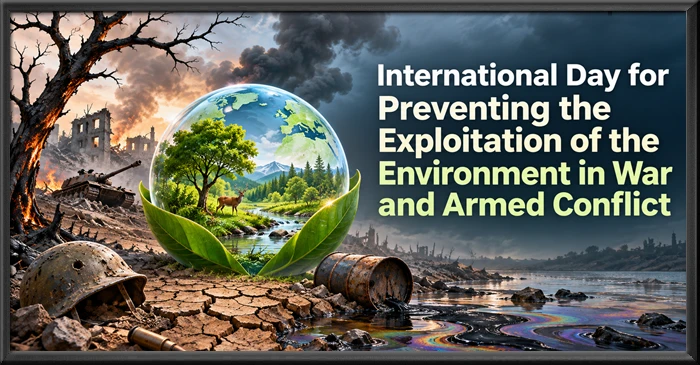
International Day for Preventing the Exploitation of the Environment in War and Armed Conflict
International Day for Preventing the Exploitation of the Environment in War and Armed Conflict is observed annually on November 6 worldwide.
Established by the United Nations General Assembly on November 5, 2001, through Resolution 56/4.
The day raises awareness about environmental destruction caused by warfare and promotes the protection of natural resources, ecosystems, and biodiversity.
International Day for Preventing the Exploitation of the Environment in War and Armed Conflict
The International Day for Preventing the Exploitation of the Environment in War and Armed Conflict is observed annually on November 6 worldwide. This United Nations observance highlights the importance of protecting the environment in war and armed conflict, raising awareness about the destruction of ecosystems, natural resources, and biodiversity caused by military operations.
The day emphasizes that environmental damage can continue affecting communities and future generations long after armed conflicts have ended.
Environment in War and Armed Conflict: History and Origin
The United Nations General Assembly established the observance on November 5, 2001, through Resolution A/RES/56/4, officially designating November 6 as an annual international day.
The resolution recognized that environmental damage during armed conflict can have lasting consequences, extending beyond national borders and affecting future generations.
It invited United Nations Member States, international organizations, and regional institutions to observe the day and promote environmental protection.
Historical Background
Environmental destruction has been associated with warfare throughout history.
During the Vietnam War, chemical herbicides, including Agent Orange, caused extensive deforestation and environmental contamination.
In 1976, the United Nations adopted the Convention on the Prohibition of Military or Any Other Hostile Use of Environmental Modification Techniques (ENMOD), establishing restrictions on certain hostile environmental modification practices.
These developments contributed to growing international recognition of the need to protect natural ecosystems during warfare.
Environmental Impacts of Armed Conflict
The environment in war and armed conflict faces numerous threats that can cause severe ecological damage.
Major environmental consequences include:
- Water contamination: Pollution of rivers, lakes, and groundwater.
- Deforestation: Destruction of forests and natural vegetation.
- Soil degradation: Contamination from explosives, chemicals, and hazardous military waste.
- Biodiversity loss: Destruction of wildlife habitats and ecosystems.
- Resource exploitation: Unsustainable extraction of minerals, timber, oil, and other natural resources.
- Long-term environmental damage: Ecological disruption that continues after hostilities end.
These consequences can threaten public health, agriculture, food security, and economic recovery.
United Nations Initiatives
The United Nations Environment Programme (UNEP) plays an important role in assessing environmental damage and supporting recovery in conflict-affected regions.
On May 27, 2016, the United Nations Environment Assembly adopted Resolution UNEP/EA.2/Res.15, titled Protection of the Environment in Areas Affected by Armed Conflict.
The resolution recognized that healthy ecosystems and sustainably managed natural resources can contribute to reducing the risk of armed conflict.
UNEP also supports environmental assessments, sustainable resource management, and post-conflict recovery initiatives.
Objectives of the Observance
The major objectives include:
- Raising awareness about environmental destruction during warfare.
- Protecting natural resources and biodiversity.
- Encouraging sustainable management of ecosystems.
- Supporting environmental restoration in conflict-affected regions.
- Strengthening international cooperation and environmental peacebuilding.
- Promoting long-term environmental security.
Importance of Protecting the Environment During War
Protecting the environment in war and armed conflict is essential for sustainable peace, public health, and ecological stability.
Natural resources such as forests, rivers, agricultural lands, and biodiversity support human livelihoods and economic development.
Their destruction can intensify humanitarian crises, create resource shortages, and complicate post-conflict reconstruction.
Environmental protection therefore forms an important part of conflict prevention, humanitarian protection, and sustainable development.
Significance
The International Day for Preventing the Exploitation of the Environment in War and Armed Conflict emphasizes that protecting nature is essential for achieving lasting peace.
The observance encourages governments, international organizations, and communities to recognize environmental destruction as a serious consequence of warfare.
It serves as an annual reminder that safeguarding ecosystems and natural resources contributes to environmental security, human well-being, and a more peaceful future.
References
- United Nations. International Day for Preventing the Exploitation of the Environment in War and Armed Conflict. https://www.un.org/en/observances/environment-in-war-protection-day
- United Nations General Assembly. Resolution A/RES/56/4 (2001). https://digitallibrary.un.org/record/451724
- United Nations Environment Programme. Protection of the Environment in Areas Affected by Armed Conflict – Resolution UNEP/EA.2/Res.15 (2016). https://wedocs.unep.org/handle/20.500.11822/11189
Also Read : World Environment Day