

Date
- Date
- 17th Mar 1864
Time
- Time
- ...

Kaka
Joseph Baptista66
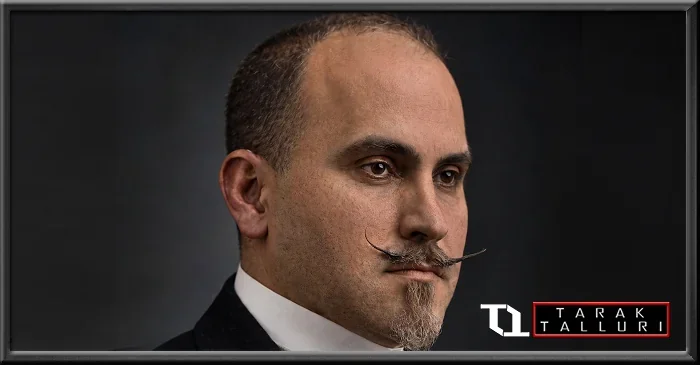
Joseph Baptista an Indian freedom fighter, politician, barrister, labour leader.
Father of Home Rule Movement in India.
Co-founder of 'The All India Trade Union Congress'.
First president of Indian Home Rule League.
He is credited with coining the slogan “Swaraj is my Birthright,” later popularised by Bal Gangadhar Tilak, and promoting public Ganpati celebrations to mobilise Indian nationalism.
Joseph Baptista – Biography, History, Home Rule Movement and Freedom Struggle
Joseph Baptista (17 March 1864 – 18 September 1930), popularly known as Kaka Baptista, was an Indian freedom fighter, lawyer, politician, and labour leader. He was a close associate of Bal Gangadhar Tilak, an important organizer of the Indian Home Rule Movement, and the first president of Tilak's Home Rule League, established in 1916.
Baptista also served as Mayor of Bombay during 1925–1926 and played an important role in advocating workers' rights and Indian self-government under British colonial rule.
Early Life and Birth of Joseph Baptista
Joseph Baptista was born on 17 March 1864 in Matharpacady, Mazagaon, Bombay, then part of British India.
His father, John Baptista, came from Uttan, near present-day Bhayandar in Maharashtra.
Baptista belonged to Bombay's East Indian Catholic community, which had a long historical presence along the western coast of India.
He completed his early education in Bombay and later studied engineering in Pune.
His education eventually took him to England, where he attended the University of Cambridge and developed a strong interest in political institutions and constitutional government.
Education and Legal Career
Joseph Baptista pursued higher education at Cambridge and qualified in law.
After returning to India, he practised as a lawyer at the Bombay High Court.
His legal career brought him into contact with political activists, nationalist leaders, and people challenging British colonial policies.
He also became involved in municipal administration and public affairs in Bombay.
Joseph Baptista and Bal Gangadhar Tilak
One of the most important relationships in Joseph Baptista's political career was his association with Indian nationalist leader Bal Gangadhar Tilak.
Baptista supported Tilak's campaign for Indian self-government and criticized British action against nationalist political leaders.
During his time in Britain, he studied the Irish Home Rule movement, which demanded constitutional self-government for Ireland.
The Irish example influenced Baptista's ideas about developing a comparable movement in India.
He subsequently encouraged Tilak to organize an Indian Home Rule campaign.
Their cooperation contributed to the growth of organized demands for Indian political autonomy.
Joseph Baptista and the Indian Home Rule Movement
Joseph Baptista was among the important early organizers of the Indian Home Rule Movement.
The movement developed during World War I, when Indian political leaders increasingly demanded self-government.
Bal Gangadhar Tilak and Annie Besant led separate but related Home Rule League organizations.
In April 1916, nationalist leaders meeting at Belgaum decided to establish Tilak's Home Rule League.
Joseph Baptista was appointed its first president, while N. C. Kelkar became secretary.
The league advocated self-government through constitutional political activity.
Baptista helped connect nationalist leaders and promote the demand for greater Indian participation in government.
His organizational role established him as an important figure in the history of India's struggle for self-rule.
Was Joseph Baptista the Founder of the Home Rule Movement?
Joseph Baptista is frequently described as an early architect or founding figure of the Indian Home Rule Movement.
His study of Irish Home Rule helped shape his proposals for a similar political organization in India.
However, the Indian Home Rule Movement developed through the collective efforts of several leaders, particularly Bal Gangadhar Tilak, Annie Besant, and their associates.
It is therefore historically more precise to describe Baptista as a founding organizer and the first president of Tilak's Home Rule League, rather than the sole founder of the entire Indian Home Rule Movement.
Joseph Baptista and the Swaraj Slogan
Joseph Baptista is sometimes credited with originating the expression associated with the demand for Swaraj, or self-rule.
The famous slogan "Swaraj is my birthright, and I shall have it" became closely associated with Bal Gangadhar Tilak.
Some historical accounts attribute an earlier formulation of the idea to Baptista.
However, the exact authorship of the slogan is disputed, and Tilak remains the political leader most strongly associated with its popularization.
Baptista's connection with the slogan illustrates his close involvement in the intellectual and organizational development of the Home Rule campaign.
Joseph Baptista as a Labour Leader
Alongside his nationalist work, Joseph Baptista advocated the interests of industrial workers in Bombay.
The city's expanding textile industry employed large numbers of workers who faced difficult conditions and limited employment protections.
Baptista supported labour organization and workers' representation.
He became associated with the early Indian trade union movement and campaigns involving mill workers and other employees.
His support for working people helped earn him the affectionate title Kaka, meaning uncle.
This popular name reflected the respect he received among sections of Bombay's working population.
Joseph Baptista and the Trade Union Movement
Baptista participated in the development of organized labour politics during the early twentieth century.
He supported workers' demands and was associated with the emerging national trade union movement.
The All India Trade Union Congress (AITUC) was established in 1920 as an important organization representing Indian workers.
Baptista was among the labour activists associated with this period of trade union development.
His work connected the struggle for political self-government with demands for economic and social improvements for workers.
Joseph Baptista and Vinayak Damodar Savarkar
Joseph Baptista's legal career also connected him with prominent revolutionary nationalist cases.
He was associated with legal efforts involving Vinayak Damodar Savarkar, who faced prosecution by British colonial authorities.
Baptista advocated legal safeguards and fair judicial proceedings.
This involvement demonstrated his concern with legal rights under colonial administration, even where political methods and ideologies differed.
Mayor of Bombay
Joseph Baptista served as Mayor of Bombay during 1925–1926.
His election represented an important stage in a public career that combined nationalism, municipal administration, law, and labour activism.
As a municipal leader, Baptista had an established connection with Bombay's civic institutions.
His tenure reflected his involvement in both local governance and the broader political movement for Indian self-government.
Bombay, now Mumbai, was one of British India's most important commercial and political centres.
Baptista's municipal career formed part of its developing tradition of Indian participation in urban administration.
Political and Social Views
Joseph Baptista supported constitutional self-government and the participation of Indians in political decision-making.
His involvement in the Home Rule Movement reflected the belief that India should gain greater control over its own administration.
He also opposed organizing political representation exclusively along religious lines.
His career demonstrated connections between nationalism, legal advocacy, labour organization, and civic participation.
Death of Joseph Baptista
Joseph Baptista died in Bombay in September 1930, aged 66.
Most accessible biographical accounts give his death date as 18 September 1930, although some historical community records report a different date.
He was buried at Sewri Christian Cemetery in Bombay.
His death marked the end of a political career closely associated with the early Home Rule Movement, workers' rights, and municipal public service.
Joseph Baptista's Historical Legacy
Joseph Baptista remains an important figure in the history of India's struggle for self-government.
His work with Bal Gangadhar Tilak helped establish the organizational foundations of the Home Rule campaign in western India.
His leadership in the early trade union movement reflected a commitment to workers' interests alongside political reform.
His tenure as Mayor of Bombay also demonstrated his contribution to civic administration.
Joseph Baptista Gardens in Mazagaon, Mumbai, commemorates his memory.
Although less widely recognized than some other independence-era leaders, Baptista contributed to the growth of Indian nationalist politics, constitutional activism, and labour organization.
Major Historical Milestones
-
17 March 1864: Joseph Baptista was born in Bombay.
-
1897: Publicly criticized British treatment of Bal Gangadhar Tilak at a Cambridge Union meeting.
-
1901: Began his association with Bombay municipal administration.
-
1915: Presided over an early Home Rule conference in Poona.
-
1916: Became the first president of Tilak's Home Rule League.
-
1920: Participated in the developing Indian trade union movement.
-
1925–1926: Served as Mayor of Bombay.
-
September 1930: Died in Bombay, aged 66.
Conclusion
Joseph Baptista, popularly known as Kaka Baptista, was an Indian freedom fighter, lawyer, labour leader, and politician whose contributions extended across nationalist politics and public administration.
His association with Bal Gangadhar Tilak, leadership of the Home Rule League in 1916, advocacy for industrial workers, and tenure as Mayor of Bombay established his place in the history of India's independence movement.
His legacy reflects the relationship between political freedom, constitutional reform, labour rights, and civic leadership in colonial India.
References
-
Maharashtra State Board for Literature and Culture – Bombay and Congress Movement (T. K. Tope)
https://sahitya.marathi.gov.in/ebooks/BOMBAY%20AND%20CONGRESS%20MOVEMENT.pdf -
Maharashtra State Gazetteers – Home Rule Movement
https://gazetteers.maharashtra.gov.in/cultural.maharashtra.gov.in/english/gazetteer/VOL-II/HOME_RULE_MOVEMENT.pdf -
Hindustan Times – Why a Mumbai Group Is Retelling the Story of a Little-Known Freedom Fighter
https://www.hindustantimes.com/mumbai-news/why-a-mumbai-group-is-retelling-the-story-of-a-little-known-freedom-fighter/story-yeE3qNBaupTUnEgzwljvoO_amp.html -
Mid-day – In Loving Memory of Beloved Freedom Fighter Kaka Baptista
https://www.mid-day.com/amp/mumbai/mumbai-news/article/mumbai-in-loving-memory-of-beloved-freedom-fighter-kaka-baptista-19817197 -
Joseph Baptista – Biographical Overview
https://en.wikipedia.org/wiki/Joseph_Baptista
Also Read : Jamnalal Bajaj