

Date
- Date
- 2 Oct 2027
Time
- Time
- ...

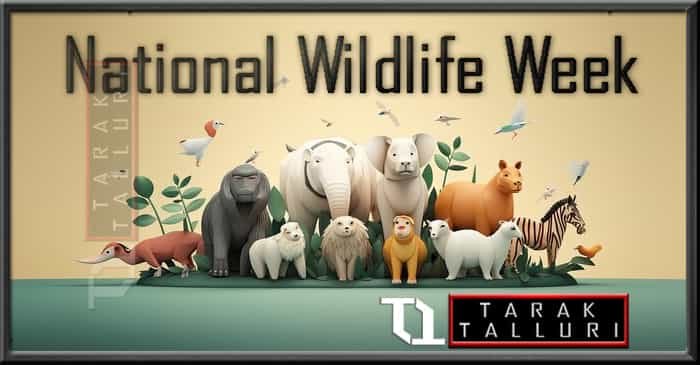
National Wildlife Week - India
National Wildlife Week is observed annually from 2 to 8 October across India.
It is to promote wildlife conservation and biodiversity protection.
Originating from the Indian Board for Wildlife's conservation initiatives in 1952, Wildlife Day began in 1955 and expanded into Wildlife Week in 1957.
The observance raises awareness about protecting wild animals, natural habitats, and endangered species.
National Wildlife Week – History, Objectives and Significance in India
National Wildlife Week, also known as Wildlife Week in India, is observed annually from 2 to 8 October to raise public awareness about wildlife conservation, biodiversity protection, and the preservation of natural habitats.
The week highlights the importance of protecting wild animals, birds, and other living organisms while encouraging individuals, educational institutions, conservation organisations, and communities to participate in wildlife protection activities.
National Wildlife Week also promotes environmental education, ecological balance, and responsible human interaction with wildlife.
History of National Wildlife Week
The origins of National Wildlife Week can be traced to 1952, when the Government of India established the Indian Board for Wildlife (IBWL) to promote wildlife protection and conservation.
The Board encouraged public awareness programmes to protect India's wildlife and natural ecosystems.
In 1955, Wildlife Day was introduced to educate citizens about wildlife conservation and the need to preserve endangered species.
The observance was subsequently expanded into Wildlife Week in October 1957, allowing more time for conservation education, public participation, and environmental awareness activities.
Over time, the annual observance became an important platform for promoting the protection of India's wildlife and biodiversity.
The dates from 2 to 8 October coincide with Gandhi Jayanti on 2 October, reflecting the values of non-violence, compassion, and respect for living beings.
Who Started National Wildlife Week?
National Wildlife Week developed from wildlife conservation and public awareness initiatives undertaken by the Government of India and the Indian Board for Wildlife.
Established in 1952, the Indian Board for Wildlife played an important role in developing policies and public education programmes for wildlife protection.
Although the observance evolved through institutional initiatives rather than the efforts of one individual, the Board's conservation programmes laid the foundation for the annual Wildlife Week.
Objectives of National Wildlife Week
The major objectives of National Wildlife Week include:
- Promoting awareness about wildlife conservation and biodiversity protection.
- Protecting endangered and threatened wildlife species.
- Encouraging the preservation of forests, wetlands, grasslands, and other natural habitats.
- Educating citizens about the ecological importance of wildlife.
- Raising awareness about poaching and illegal wildlife trade.
- Promoting peaceful coexistence between humans and wild animals.
- Encouraging students and young people to participate in conservation activities.
- Supporting community involvement in protecting wildlife and natural ecosystems.
How Is National Wildlife Week Celebrated?
National Wildlife Week is observed through educational, environmental, and conservation activities organised by forest departments, wildlife authorities, educational institutions, zoos, and conservation organisations.
Wildlife Awareness Programmes
Government departments and conservation organisations conduct educational campaigns highlighting the importance of wildlife conservation, endangered species protection, and habitat preservation.
School and College Activities
Educational institutions organise essay-writing competitions, drawing competitions, quizzes, seminars, debates, and presentations on wildlife conservation.
These activities encourage students to understand biodiversity and environmental responsibility.
Nature Walks and Wildlife Education
Birdwatching programmes, nature walks, wildlife photography activities, and visits to national parks and zoological parks help participants learn about animals and their natural environments.
Conservation Campaigns
Wildlife organisations conduct programmes addressing habitat destruction, illegal wildlife trade, environmental pollution, and threats to endangered species.
Community Participation
Local communities, conservation volunteers, forest officials, and environmental organisations participate in activities that promote biodiversity conservation and sustainable environmental practices.
Importance of Wildlife Conservation in India
India is home to diverse wildlife species and ecosystems, including tropical forests, grasslands, wetlands, deserts, mountains, and coastal habitats.
The country's wildlife includes Bengal tigers, Asiatic lions, Indian elephants, greater one-horned rhinoceroses, snow leopards, gharials, and numerous bird, reptile, amphibian, and insect species.
Protecting wildlife is essential for maintaining ecological balance and preserving natural resources.
Wild animals contribute to healthy ecosystems through pollination, seed dispersal, nutrient cycling, and the regulation of food chains.
The destruction of habitats, illegal hunting, pollution, and human-wildlife conflict threaten many species.
National Wildlife Week encourages greater awareness of these challenges and promotes collective responsibility for protecting biodiversity.
Wildlife Protection Initiatives in India
India has undertaken several initiatives to strengthen wildlife conservation.
Wildlife (Protection) Act, 1972
The Wildlife (Protection) Act, 1972, provides the principal legal framework for wildlife protection in India, including measures regulating hunting, protected areas, and wildlife trade.
Project Tiger
Launched in 1973, Project Tiger focuses on conserving India's tiger populations and protecting their natural habitats.
Project Elephant
Introduced in 1992, Project Elephant supports elephant conservation, habitat protection, and measures addressing human-elephant conflict.
National Parks and Wildlife Sanctuaries
India's network of national parks, wildlife sanctuaries, conservation reserves, and community reserves provides important habitats for wildlife and helps protect the country's biodiversity.
These conservation initiatives reflect the broader objectives promoted during National Wildlife Week.
Significance of National Wildlife Week
National Wildlife Week highlights the relationship between biodiversity conservation and environmental sustainability.
Wildlife plays an essential role in maintaining ecosystems, supporting healthy forests, and preserving natural processes.
The observance encourages the protection of threatened species while promoting public understanding of the importance of natural habitats.
It also creates opportunities for conservation education, responsible tourism, scientific awareness, and community participation.
By encouraging individuals to recognise their role in protecting wildlife, National Wildlife Week supports the long-term preservation of India's natural heritage.
Conclusion
National Wildlife Week, observed annually from 2 to 8 October, represents India's commitment to wildlife conservation, environmental education, and biodiversity protection.
Originating from conservation initiatives associated with the Indian Board for Wildlife in 1952, the observance developed from Wildlife Day in 1955 into a week-long programme in 1957.
Through educational activities, conservation campaigns, and public participation, National Wildlife Week continues to promote awareness about protecting wildlife and preserving natural habitats for future generations.
References
- Government of India – National Wildlife Action Plan 2017–2031
https://ntca.gov.in/assets/uploads/Reports/Others/Wildlife_Action_Plan_2017_31.pdf - Press Information Bureau – Wildlife Week Observance
https://www.pib.gov.in/Pressreleaseshare.aspx?PRID=1963487&lang=2®=48 - Ministry of Environment, Forest and Climate Change – Wildlife Division
https://www.moef.gov.in/wildlife-wl - Press Information Bureau – National Board for Wildlife
https://www.pib.gov.in/newsite/erelcontent.aspx?lang=2®=48&relid=18417 - Vikaspedia – National Wildlife Week
https://climate-resilience.vikaspedia.in/viewcontent/climate-resilience/policies-and-schemes/national-wildlife-week?lgn=en
Also Read: World Wildlife Day