

Date
- Date
- 31st Oct 2005
Time
- Time
- ...

Padma Bhushan
P. Leela71
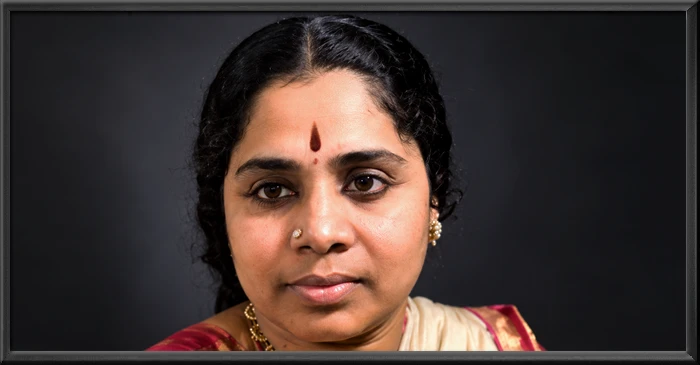
P. Leela – an Indian playback songstress, Carnatic vocalist, and music directress.
One of the prominent voices of South Indian cinema.
She recorded approximately 5,000 songs across Malayalam, Telugu, Tamil, Kannada, and other languages.
Renowned for her classical singing, she received the Padma Bhushan posthumously in 2006.
P. Leela: Biography, Early Life, Singing Career, Songs, Awards and Legacy
P. Leela, born Porayath Leela, was an Indian playback singer, Carnatic vocalist, and music director who became one of the prominent voices of South Indian cinema. Her contribution to Malayalam, Telugu, Tamil, Kannada, and other Indian-language films established her as an important figure in the history of Indian playback singing.
Known for her classical training, expressive voice, and precise pronunciation, she performed film songs, devotional compositions, and classical music throughout her career.
Early Life and Education
P. Leela was born on May 19, 1934, in Chittur, in the present-day Palakkad district of Kerala, India.
Her parents were V. K. Kunjanmenon and Porayath Meenakshi Amma. Her father, a schoolteacher with an interest in classical music, encouraged her musical education from an early age.
In 1944, she moved to Madras to pursue advanced training in Carnatic music. Her classical education helped develop the vocal technique and musical discipline that later distinguished her playback performances.
Beginning of Her Playback Singing Career
P. Leela began her playback singing career in 1948 with the Tamil film Kangkanam, recording the song Sree Varalakshmi.
She also contributed to the Malayalam film Nirmala in 1948, marking an important milestone in her early Malayalam film career.
Her ability to combine Carnatic musical traditions with the expressive demands of cinema helped her gain recognition among leading music directors.
During the following decades, she became a familiar voice in South Indian film music.
Contribution to Telugu Cinema
P. Leela entered Telugu cinema in 1949, performing songs for films including Mana Desam, Keelu Gurram, and Gunasundari Katha.
Her association with the celebrated Telugu singer and music director Ghantasala Venkateswara Rao became an important part of her career.
She contributed to several notable Telugu films, including:
- Gunasundari Katha (1949)
- Patala Bhairavi (1951)
- Missamma (1955)
- Lava Kusa (1963)
Her classical singing ability and expressive performances made her especially suitable for mythological, devotional, and dramatic film compositions.
Her recordings remain part of the musical heritage of Telugu cinema.
Malayalam and Tamil Film Music
P. Leela established a significant reputation in Malayalam cinema through her early recordings and collaborations with prominent composers.
She worked with influential music directors such as V. Dakshinamoorthy, K. Raghavan, G. Devarajan, and M. S. Viswanathan.
Her repertoire included classical-based melodies, devotional songs, emotional compositions, and film duets.
She also sang extensively in Tamil cinema and contributed recordings in Kannada and other Indian languages.
Her ability to perform across different regional musical traditions distinguished her career.
Carnatic Music and Devotional Recordings
Carnatic music remained central to P. Leela's artistic identity.
Her classical training enabled her to perform compositions requiring technical precision, controlled expression, and a detailed understanding of traditional ragas.
Alongside playback singing, she recorded devotional compositions that earned appreciation among listeners beyond cinema.
Her renditions of Narayaneeyam and other devotional works became an important part of her musical legacy.
Through these recordings, she contributed to the continued popularity of classical and devotional music.
P. Leela as a Music Director
Beyond her achievements as a singer, P. Leela also contributed to music direction.
She worked as a music director for the Telugu film Chinnari Papalu (1968), a production associated with women working in important creative roles.
This contribution demonstrated her musical abilities beyond vocal performance.
Awards and Recognition
P. Leela received several honors for her contributions to Indian music and cinema.
Padma Bhushan (2006): The Government of India honored her posthumously with the Padma Bhushan, one of the country's highest civilian awards.
Kalaimamani (1992): She received the Kalaimamani Award from the Government of Tamil Nadu in recognition of her artistic contributions.
Kerala State Film Award (1969): She received recognition for playback singing in the Malayalam film Kadalpalam.
Kerala Sangeetha Nataka Akademi Award (1983): She was honored for her contributions to classical music.
These awards reflect her influence across classical, devotional, and cinematic musical traditions.
Death of P. Leela
P. Leela died on October 31, 2005, in Chennai, Tamil Nadu, India, at the age of 71.
Her death marked the loss of an influential figure in South Indian music.
She was cremated with state honors in Chennai.
The Government of India subsequently recognized her musical contributions with the Padma Bhushan in 2006.
Legacy and Contribution to Indian Music
P. Leela occupies an important place in the history of South Indian playback singing.
Her career connected Carnatic classical music with the development of modern film music in Malayalam, Telugu, Tamil, and Kannada cinema.
She collaborated with influential composers and performed songs across several genres and languages.
Her recordings continue to be appreciated for their classical foundation, expressive delivery, and historical importance.
Her contributions also illustrate the role of women singers in shaping the musical identity of Indian cinema during the twentieth century.
Conclusion
P. Leela was a distinguished Indian playback singer, Carnatic vocalist, and music director whose work enriched South Indian cinema.
From her early musical training in Kerala to her extensive multilingual playback career, she demonstrated exceptional dedication to classical and cinematic music.
Her songs, devotional recordings, and contributions to music direction remain an important part of India's musical heritage.
References
- National Film Archive of India (NFAI) — P. Leela (Porayathu Leela): Biographical information, Carnatic music training, singing career, and posthumous Padma Bhushan recognition (2006).
https://nfai.nfdcindia.com/audio_interview_detail.php?id=MzU%3D - Press Information Bureau, Government of India — Padma Awards 2006: Official announcement of civilian honors.
https://www.pib.gov.in/newsite/erelcontent.aspx?lang=2®=48&relid=15145 - The Times of India / Press Trust of India (October 31, 2005) — Renowned Singer P. Leela Passes Away: Contemporary news report covering her death, career, devotional recordings, and recognition.
https://timesofindia.indiatimes.com/india/renowned-singer-p-leela-passes-away/articleshow/1280439.cms - Malayala Chalachithram — P. Leela: Malayalam filmography, birth and death dates, and recorded film-song credits.
https://www.malayalachalachithram.com/profiles.php?i=16 - MalayalaSangeetham Database — P. Leela: Playback singing career, Malayalam songs, music directors, and awards.
https://en.msidb.org/displayProfile.php?artist=P+Leela&category=singers&l=100 - Wikipedia — P. Leela: General biographical overview, early life, film career, discography, awards, and legacy.
https://en.wikipedia.org/wiki/P._Leela
Also Read: Leela Chitnis