

Date
- Date
- 11 Nov 2026
Time
- Time
- ...

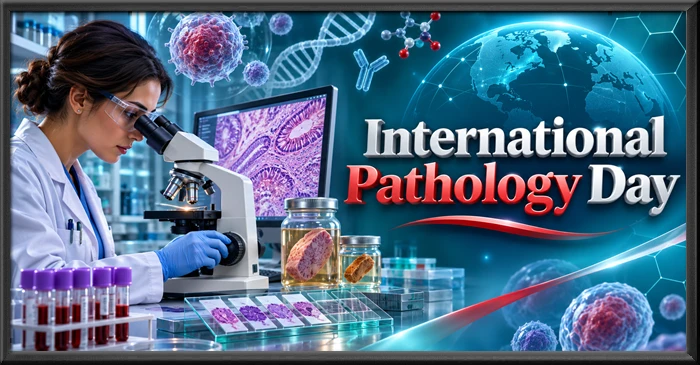
International Pathology Day
International Pathology Day is observed annually in November, with dates varying by year.
First celebrated on November 5, 2014, the observance was established by the Royal College of Pathologists (UK) to recognise pathology's essential role in disease prevention, diagnosis, treatment, and research.
It promotes public awareness, professional collaboration, and improvements in laboratory medicine worldwide.
International Pathology Day – History, Founder, Date and Significance
International Pathology Day is observed annually in November to recognise the essential contributions of pathology and laboratory medicine to disease prevention, diagnosis, treatment, medical research, and global healthcare.
Established in 2014 by the Royal College of Pathologists (RCPath) in the United Kingdom, International Pathology Day brings together pathologists, laboratory scientists, healthcare professionals, researchers, and professional organisations worldwide.
The observance highlights the often-unseen work of pathology professionals who help doctors understand diseases, select appropriate treatments, and monitor patient health.
History of International Pathology Day
Origin and Establishment – 2014
International Pathology Day was established by the Royal College of Pathologists in collaboration with pathology and laboratory medicine organisations internationally.
The initiative originated from efforts to improve public understanding of pathology and recognise its contribution to healthcare systems.
The first International Pathology Day was held on November 5, 2014, as part of the Royal College of Pathologists' National Pathology Week activities.
The inaugural observance involved professional organisations, pathologists, scientists, and healthcare institutions from several countries.
It promoted international cooperation, professional education, public awareness, and discussion of developments in pathology and laboratory medicine.
Development of the International Observance
Following its establishment, International Pathology Day developed into an annual international awareness event.
The Royal College of Pathologists and participating professional organisations have organised conferences, lectures, scientific discussions, educational activities, and public awareness programmes.
These activities highlight developments in laboratory medicine and the role of pathology in addressing global health challenges.
International Pathology Day also provides opportunities for professionals from different countries to exchange knowledge, discuss innovations, and improve healthcare practices.
Who Founded International Pathology Day?
International Pathology Day was founded in 2014 by the Royal College of Pathologists (RCPath), a UK-based professional medical organisation.
The initiative was introduced in partnership with pathology and laboratory medicine institutions worldwide.
The Royal College of Pathologists promotes professional standards, medical education, training, research, and public understanding of pathology.
The establishment of International Pathology Day helped provide a dedicated international platform for recognising pathology professionals and their contributions to medicine.
No single individual is officially credited as the sole founder of the observance.
When Is International Pathology Day Observed?
International Pathology Day takes place annually in November.
The exact date has varied across different years and is confirmed through announcements from the Royal College of Pathologists and participating organisations.
The observance has commonly taken place on a Wednesday, but its position within November has not remained consistent.
Therefore, International Pathology Day should not be treated as a permanently fixed calendar-date observance.
What Is Pathology?
Pathology is the scientific study of disease, including its causes, mechanisms, development, and effects on the human body.
It serves as a connection between medical science and clinical healthcare.
Pathologists and laboratory medicine professionals analyse blood, tissues, cells, bodily fluids, and other biological samples to help diagnose diseases and guide treatment.
Their work contributes to the detection and management of conditions such as cancer, infections, blood disorders, metabolic diseases, and inherited disorders.
Pathology also plays an important role in preventive medicine, disease surveillance, medical research, and public health.
Major Branches of Pathology
Pathology includes several specialised fields that contribute to healthcare.
1. Histopathology
Histopathology involves examining tissue samples under a microscope to identify disease-related structural changes.
It is particularly important in the diagnosis and classification of many cancers and other tissue disorders.
2. Haematology
Haematology focuses on blood, blood-forming tissues, and blood-related disorders.
Laboratory investigations help assess conditions such as anaemia, blood cancers, and clotting abnormalities.
3. Clinical Biochemistry
Clinical biochemistry analyses chemical substances in blood and other bodily fluids.
It supports the assessment of metabolic disorders, diabetes, kidney function, liver function, and hormonal conditions.
4. Medical Microbiology
Medical microbiology studies microorganisms associated with human disease.
It supports the identification of infectious organisms and helps guide infection prevention and antimicrobial treatment.
5. Immunology
Immunology investigates the immune system and its response to infections, allergies, autoimmune conditions, and other disorders.
6. Molecular Pathology
Molecular pathology uses molecular and genetic techniques to investigate disease.
It plays an increasing role in cancer classification, inherited disease diagnosis, and the selection of targeted treatments.
7. Cytopathology
Cytopathology examines individual cells or small groups of cells to identify abnormalities.
It is used in selected cancer screening and diagnostic investigations.
8. Forensic Pathology
Forensic pathology applies medical and pathological knowledge to investigate deaths, particularly where circumstances require legal or medicolegal examination.
Importance of Pathology in Healthcare
Disease Diagnosis
Pathology investigations provide essential evidence that helps healthcare professionals identify illnesses accurately.
Cancer Detection and Treatment
Pathologists examine tissue and cell samples to diagnose cancers, classify tumours, and provide information relevant to treatment decisions.
Infection Control
Laboratory specialists help identify infectious organisms and contribute to infection prevention, antimicrobial stewardship, and outbreak investigations.
Monitoring Treatment
Blood tests and other laboratory investigations help clinicians assess disease progression and evaluate responses to treatment.
Preventive Healthcare
Pathology supports screening programmes, early detection, and assessment of risk factors for certain diseases.
Medical Research
Pathologists and laboratory scientists contribute to research into disease mechanisms, diagnostic technologies, medicines, and personalised healthcare.
Objectives of International Pathology Day
The principal objectives of International Pathology Day are:
- Increase public awareness of pathology and laboratory medicine.
- Recognise the contributions of pathologists and laboratory scientists.
- Highlight the importance of accurate and timely diagnosis.
- Encourage collaboration among international healthcare organisations.
- Promote advances in pathology education and scientific research.
- Support improvements in laboratory quality and patient safety.
- Increase understanding of pathology's role in disease prevention and treatment.
- Encourage equitable access to reliable diagnostic services.
- Inspire students and young professionals to explore careers in pathology.
How Is International Pathology Day Observed?
International Pathology Day is celebrated through professional, educational, and public awareness activities.
International Conferences
Professional organisations host conferences bringing together pathologists, researchers, scientists, and healthcare professionals.
Scientific Seminars
Educational programmes discuss advances in diagnostic techniques, molecular pathology, medical research, and laboratory medicine.
Public Awareness Campaigns
Hospitals, universities, laboratories, and professional associations share information about the role of pathology in healthcare.
Laboratory Education
Some participating institutions organise laboratory visits, demonstrations, and educational sessions to explain how diagnostic investigations are performed.
Professional Recognition
Healthcare organisations acknowledge the contributions of pathologists, biomedical scientists, and laboratory professionals.
Research and Innovation
Scientific discussions highlight developments in digital pathology, laboratory technologies, molecular diagnostics, and personalised medicine.
International Pathology Day and Modern Medical Technology
Medical technology has expanded the capabilities of pathology.
Digital pathology allows selected tissue specimens to be examined as high-resolution digital images.
Molecular diagnostic techniques help identify genetic and biological changes associated with certain diseases.
Artificial intelligence is being investigated and increasingly applied in selected pathology workflows, including image analysis and decision support.
These developments may improve diagnostic efficiency, professional collaboration, and the identification of disease-related patterns.
However, new technologies require appropriate clinical validation, quality assurance, professional oversight, and patient safety safeguards.
International Pathology Day provides an opportunity to discuss the responsible development and application of such technologies.
International Pathology Day and Global Health
Pathology services are essential components of healthcare systems around the world.
Reliable laboratory diagnosis supports infectious disease control, cancer care, maternal healthcare, chronic disease management, and public health surveillance.
However, access to pathology services differs across countries and healthcare systems.
Challenges may include shortages of trained professionals, limited laboratory infrastructure, high diagnostic costs, and unequal access to modern technologies.
International professional collaboration can support education, workforce development, laboratory quality, and improvements in diagnostic capacity.
Significance of International Pathology Day
International Pathology Day recognises a medical discipline that is central to modern healthcare but often receives limited public attention.
Many important clinical decisions depend on information generated by pathology laboratories.
The observance acknowledges the contributions of professionals whose work supports accurate diagnosis, effective treatment, disease monitoring, and medical research.
It also promotes international cooperation in strengthening pathology services and addressing global healthcare challenges.
By improving public awareness and encouraging professional collaboration, International Pathology Day contributes to greater recognition of laboratory medicine and its importance to patient care.
Conclusion
International Pathology Day is observed annually in November to celebrate the contributions of pathology and laboratory medicine to global healthcare.
Established by the Royal College of Pathologists in 2014, with its first observance on November 5, the day recognises the essential work of pathologists, laboratory scientists, and other healthcare professionals.
Its continuing significance lies in promoting diagnostic excellence, medical research, professional collaboration, public awareness, and improved healthcare outcomes worldwide.
References
- Royal College of Pathologists – First International Pathology Day Announcement (2014)
https://www.rcpath.org/discover-pathology/news/the-royal-college-of-pathologists-hosts-first-international-pathology-day-as-part-of-national-pathology-week-2014.html - Royal College of Pathologists – International Pathology Day 2015
https://www.rcpath.org/discover-pathology/news/international-pathology-day.html - Royal College of Pathologists – International Pathology Day and Global Collaboration
https://www.rcpath.org/discover-pathology/news/wherever-you-are-join-the-celebration-for-international-pathology-day-2026.html - Royal College of Pathologists – What Is Pathology?
https://www.rcpath.org/discover-pathology/what-is-pathology.html - Royal College of Pathologists – Pathology Facts and Figures
https://www.rcpath.org/discover-pathology/news/fact-sheets/pathology-facts-and-figures-.html - Royal College of Pathologists – International Pathology Day 2024
https://www.rcpath.org/discover-pathology/news/blog-celebrating-international-pathology-day-2024.html - Royal College of Pathologists of Australasia – International Pathology Day
https://www.rcpa.edu.au/Events/PathologyDay
Also Read : World Retina Day