

Date
- Date
- 27th Nov 1945
Time
- Time
- ...

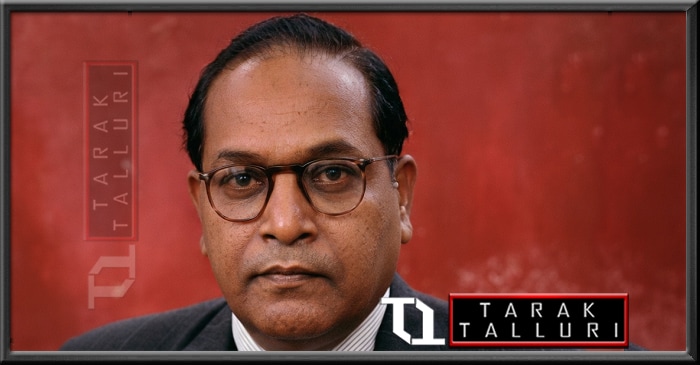
Indian Labour Conference Approved the 48-Hour Working Week Under B. R. Ambedkar.
On 20 July 1942, B. R. Ambedkar joined the Viceroy’s Executive Council as its Labour Member.
On 29 July 1943, he introduced a bill to amend the Mines Maternity Benefit Act, 1941, to strengthen maternity protection for women mine workers.
On 27 November 1945, he championed the 48-hour working week at the seventh session of the Indian Labour Conference in New Delhi.
Historical Background
During British colonial rule, industrial workers in India often faced prolonged working hours, inadequate wages, unsafe working conditions and limited welfare facilities.
The Factories Act of 1934 prescribed maximum working limits of 54 hours per week for perennial factories and 60 hours per week for seasonal factories. During the Second World War, exemptions granted to certain industrial establishments resulted in extended working hours.
These conditions highlighted the need for comprehensive labour reforms to protect workers' health, welfare and economic security.
B. R. Ambedkar’s Role in Labour Reforms
In July 1942, B. R. Ambedkar became the Labour Member of the Viceroy’s Executive Council, a position he held until 1946.
During his tenure, Ambedkar advocated shorter working hours, fair wages, social security, industrial safety and improved employment conditions.
He recognised that excessive working hours affected not only the physical health of workers but also their family life, education, social participation and personal development.
His approach to labour welfare combined legislative reforms with cooperation between governments, employers and workers.
Approval of the 48-Hour Working Week in India
The seventh session of the Indian Labour Conference was held in New Delhi on 27 and 28 November 1945.
The conference brought together representatives of the Central and Provincial Governments, princely states, employers and workers' organisations to discuss major industrial and labour issues.
On 27 November 1945, the conference unanimously endorsed the principle of a 48-hour working week in Indian factories.
A 48-hour working week was equivalent to an average of eight working hours per day across six working days.
The conference also considered matters relating to minimum wage legislation, unemployment insurance, employment exchanges and industrial canteens.
Factories Act Amendment of 1946
Following the conference, Ambedkar introduced legislative proposals to reduce the maximum working hours prescribed under the Factories Act of 1934.
During the legislative debates of February 1946, he explained that workers had experienced considerable physical strain due to extended wartime working hours and required substantial relief.
He also argued that shorter working hours could help create additional employment opportunities during the post-war economic transition.
The 1946 amendment reduced the maximum working hours in perennial factories from 54 to 48 hours per week and from 10 to 9 hours per day.
Although the statutory daily maximum was nine hours, the 48-hour weekly standard represented a major advancement towards the eight-hour working day.
International Background of the 8-Hour Workday (48-Hour Working Week)
The movement for an eight-hour working day developed internationally during the nineteenth and early twentieth centuries.
In 1919, the International Labour Organization adopted the Hours of Work (Industry) Convention, establishing the principle of an eight-hour working day and a 48-hour working week for industrial employment, subject to country-specific provisions.
British India was initially permitted to follow a higher weekly working limit.
Ambedkar’s labour reforms helped bring Indian industrial working conditions closer to internationally recognised labour standards.
Other Labour Reforms Under Ambedkar
Apart from the reduction of industrial working hours, Ambedkar contributed to several important labour welfare initiatives, including:
- Paid annual leave for factory workers.
- Maternity benefits for women workers.
- Improved compensation provisions for workers.
- Establishment of employment exchanges.
- Industrial dispute resolution mechanisms.
- Welfare measures for mine workers.
- The Mica Mines Labour Welfare Fund.
- Greater cooperation between governments, employers and workers.
These initiatives contributed to the development of India's institutional framework for labour welfare and social security.
Significance of the 48-Hour Working Week Reform
The reduction of industrial working hours represented an important milestone in India's labour history.
It contributed to improved working conditions, greater opportunities for rest, better occupational health and a more balanced relationship between employment and personal life.
It also strengthened the principle that industrial development should recognise workers' dignity, health and social welfare.
Legacy in Independent India
The Factories Act of 1948, which came into force on 1 April 1949, continued the development of statutory labour protection by prescribing a maximum of 48 working hours per week and nine hours per day for adult factory workers, subject to specified exceptions.
Ambedkar’s contributions during the colonial period helped establish the foundations of these subsequent labour protections.
His advocacy for reasonable working hours, social justice and workers' welfare remains an important part of India's labour rights history.
References for 48-Hour Working Week
- Government of India – Dr. Babasaheb Ambedkar: Writings and Speeches, Volume 10
- International Labour Organization – October 1945 Labour Report
- Seventh Labour Conference, 27–28 November 1945 – Government of India Proceedings Catalogue
- President of India – Dr. B. R. Ambedkar Memorial Lecture, 2014
- International Labour Organization – Hours of Work Convention, 1919
- India Code – Factories Act, 1948
Also Read : Ramabai Ambedkar