

Date
- Date
- 14 Nov 2027
Time
- Time
- ...

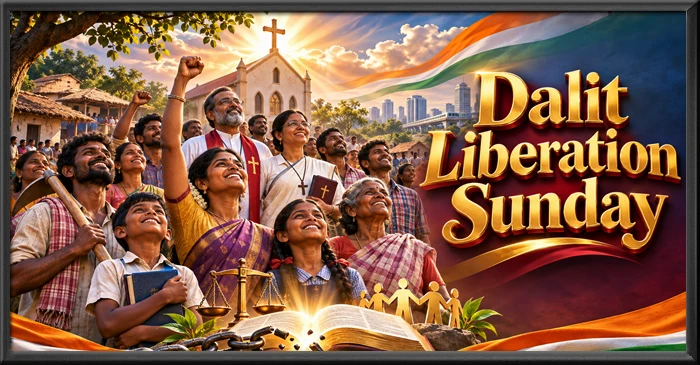
Dalit Liberation Sunday - India
Dalit Liberation Sunday is observed annually on the second Sunday of November in India.
Organised by the Catholic Bishops' Conference of India and the National Council of Churches in India, it promotes Dalit dignity, equality, and justice.
Its roots extend to Justice Sunday in 1992, with a dedicated observance established in 2007 and the November schedule subsequently adopted.
Dalit Liberation Sunday – India: History, Origins, Date and Significance
Dalit Liberation Sunday is observed annually on the second Sunday of November in India to promote Dalit dignity, equality, social justice, and the elimination of caste-based discrimination.
The observance is jointly promoted by the Catholic Bishops' Conference of India (CBCI) and the National Council of Churches in India (NCCI), bringing together Catholic, Protestant, Orthodox, and other participating Christian communities.
Dalit Liberation Sunday encourages churches and congregations to recognise the experiences of Dalit communities, oppose caste discrimination, and strengthen their commitment to equality, human rights, and social inclusion.
History of Dalit Liberation Sunday
The history of Dalit Liberation Sunday is connected to longstanding Christian initiatives addressing caste discrimination and the rights of Dalit communities in India.
Early Origins – 1992
The Catholic Bishops' Conference of India's Policy of Dalit Empowerment, issued in 2016, records that Justice Sunday had been observed as Dalit Liberation Sunday since 1992.
The observance encouraged Christian communities to reflect on caste discrimination, human dignity, equality, and the social responsibilities of the Church.
From 2000, it was associated with a Sunday close to Human Rights Day, observed internationally on December 10.
These earlier observances established an important historical foundation for subsequent Dalit Liberation Sunday programmes.
Dalit Christian Liberation Sunday – 2007
A major milestone occurred on April 26, 2007, when Catholic church authorities adopted a dedicated observance known as Dalit Christian Liberation Sunday.
The Tamil Nadu Bishops' Council Commission for Scheduled Castes and Scheduled Tribes records that the initiative was officially declared during a Catholic bishops' meeting in Bangalore.
The first observance under this dedicated initiative took place on December 9, 2007.
The programme emphasised opposition to caste discrimination and untouchability, including discriminatory practices within Christian communities.
The initiative received support from the National Council of Churches in India and participating Christian organisations.
Rev. Fr. Cosmon Arokiasamy, associated with the CBCI's Scheduled Castes and Scheduled Tribes work, played an important role in developing the initiative.
Transition to November – 2016 and 2017
Originally, Dalit Liberation Sunday was associated with December, particularly the period around Human Rights Day.
However, the observance was subsequently moved to November.
The National Council of Churches in India organised Dalit Liberation Sunday on November 13, 2016, while also allowing participating congregations to observe it on a subsequent Sunday.
The CBCI's biennial report documents a separate Catholic observance on December 11, 2016.
The same report confirms that the CBCI Standing Committee subsequently changed its schedule to the second week of November.
Accordingly, the Catholic observance was held on November 12, 2017.
Since then, the second Sunday of November has been the established annual schedule promoted by the participating church organisations.
Who Founded Dalit Liberation Sunday?
Dalit Liberation Sunday developed through the combined efforts of Christian church organisations rather than a single individual.
The Catholic Bishops' Conference of India and the National Council of Churches in India are the principal institutions associated with its organisation and promotion.
The observance's history includes Justice Sunday activities documented from 1992, the dedicated Dalit Christian Liberation Sunday initiative of 2007, and the later adoption of the November schedule.
Therefore, identifying 2007 as the sole beginning of all Dalit Liberation Sunday observances would overlook its earlier historical background.
When Is Dalit Liberation Sunday Observed?
Dalit Liberation Sunday is observed annually on the second Sunday of November.
The date changes each year because it follows a weekday-based calendar rule rather than a fixed date.
Churches may organise additional observances on nearby Sundays according to local arrangements.
The occasion was historically linked to Human Rights Day in December, although its established November schedule no longer coincides directly with that international observance.
What Is the Purpose of Dalit Liberation Sunday?
The primary purpose of Dalit Liberation Sunday is to promote equality, human dignity, and justice for Dalit communities, particularly Dalit Christians.
The observance encourages Christian congregations to examine caste-based discrimination within religious institutions and wider society.
It also provides a platform for discussing social exclusion, equal opportunities, community participation, and the experiences of historically marginalised people.
Its organisers emphasise that religious faith and church membership should not become grounds for perpetuating caste hierarchies.
Dalit Liberation Sunday and the Struggle Against Caste Discrimination
Dalit Liberation Sunday addresses the continuing challenges associated with caste-based discrimination in India.
Although the Constitution of India prohibits untouchability under Article 17, caste-based exclusion and inequality remain important social concerns.
Church organisations associated with the observance have also acknowledged discrimination experienced by Dalit Christians within religious communities.
Dalit Liberation Sunday encourages participating institutions to recognise these challenges and develop practical measures supporting equality and inclusion.
The observance also highlights the rights, representation, and cultural identity of Dalit communities.
Dalit Christians and Constitutional Rights
One of the significant issues associated with Dalit Liberation Sunday is the demand for equal legal and social recognition of Dalit Christians.
Paragraph 3 of the Constitution (Scheduled Castes) Order, 1950, restricts Scheduled Caste recognition on religious grounds.
The original order applied to Hindus, with later amendments extending eligibility to Sikhs in 1956 and Buddhists in 1990.
Dalit Christian organisations have challenged the exclusion of Christians of Scheduled Caste origin and advocated reforms.
The CBCI and NCCI have supported campaigns calling for equal rights and recognition.
This issue remains part of the observance's social justice and human rights advocacy.
Objectives of Dalit Liberation Sunday
The principal objectives of Dalit Liberation Sunday are:
- Promote the dignity and equality of Dalit communities.
- Oppose caste discrimination and untouchability.
- Encourage social inclusion within Christian institutions.
- Raise awareness of the rights and experiences of Dalit Christians.
- Promote equal participation in religious and community life.
- Strengthen cooperation among different Christian denominations.
- Support education, social empowerment, and leadership opportunities.
- Encourage solidarity with marginalised communities.
- Promote reflection on justice, equality, and human rights.
How Is Dalit Liberation Sunday Observed?
Dalit Liberation Sunday is marked through religious, educational, and community programmes organised by participating churches and Christian institutions.
Special Church Services
Churches conduct worship services, prayers, and reflections focusing on dignity, equality, and liberation from discrimination.
Sermons and Biblical Reflections
Religious leaders address themes of justice, compassion, inclusion, and solidarity.
Biblical passages concerning equality and concern for marginalised people are commonly included in the observance.
Awareness Programmes
Church organisations arrange discussions and educational activities addressing caste discrimination and the experiences of Dalit communities.
Community Participation
Dalit Christians and other community members participate in worship, discussions, and public awareness activities.
Ecumenical Cooperation
Catholic, Protestant, Orthodox, and other participating churches collaborate in organising the observance.
Educational Resources
The NCCI and CBCI distribute posters, worship materials, and educational resources to participating institutions.
Role of the CBCI and NCCI
Catholic Bishops' Conference of India
The Catholic Bishops' Conference of India promotes awareness of Dalit rights through its commissions, policies, educational activities, and advocacy programmes.
Its Policy of Dalit Empowerment recognises the need to address caste discrimination and improve opportunities for Dalit Christians.
The organisation supports Dalit Liberation Sunday as part of its commitment to dignity and inclusion.
National Council of Churches in India
The National Council of Churches in India is an ecumenical organisation representing participating Protestant and Orthodox churches and associated Christian institutions.
Through its Commission on Dalit Concerns, the NCCI prepares worship resources and promotes Dalit Liberation Sunday among its member organisations.
Its activities emphasise the connection between Christian faith, equality, and social justice.
Role of the World Council of Churches
The World Council of Churches has highlighted Dalit Liberation Sunday through its international communication and ecumenical activities.
In October 2018, the organisation reported on preparations for the November observance in India.
Its coverage described the efforts of the CBCI and NCCI to raise awareness about caste discrimination and encourage participation among local congregations.
This international attention helped bring greater visibility to the concerns addressed by Dalit Liberation Sunday.
Significance of Dalit Liberation Sunday
Dalit Liberation Sunday is significant as a religious and social awareness observance connecting Christian communities with questions of human dignity, equality, and justice.
It recognises the experiences of Dalit Christians and encourages religious institutions to challenge discriminatory practices.
The observance also highlights the importance of representation, equal opportunity, education, and community empowerment.
Its ecumenical character promotes cooperation among different Christian denominations in addressing shared social concerns.
From a historical perspective, Dalit Liberation Sunday reflects the development of organised church initiatives against caste discrimination in India.
Dalit Liberation Sunday and Dalit History Month – Difference
Dalit Liberation Sunday and Dalit History Month are distinct observances.
| Feature | Dalit Liberation Sunday | Dalit History Month |
|---|---|---|
| Location | India | International, with strong Indian connections |
| Date | Second Sunday of November | April |
| Type | Christian religious and social justice observance | Dalit history and cultural awareness observance |
| Main Focus | Dalit dignity, liberation, and opposition to caste discrimination | Dalit history, achievements, cultural heritage, and social movements |
| Associated Organisations | CBCI and NCCI | Dalit-led initiatives, researchers, and community organisations |
Both address Dalit experiences and social justice, but they differ in their historical development, organisation, and focus.
Conclusion
Dalit Liberation Sunday, observed annually on the second Sunday of November in India, promotes dignity, equality, social justice, and the elimination of caste discrimination.
Its documented historical background extends to Justice Sunday observances in 1992. The dedicated Dalit Christian Liberation Sunday initiative was established in 2007, while the present November schedule developed through changes implemented by the NCCI and CBCI in 2016 and 2017.
The observance continues to bring participating Christian communities together in support of Dalit rights, inclusion, and freedom from discrimination.
References
- Catholic Bishops' Conference of India – Policy of Dalit Empowerment in the Catholic Church in India (2016)
https://www.cbci.in/DownloadMat/dalit-policy.pdf - Catholic Bishops' Conference of India – Office for Scheduled Castes and Backward Classes, Biennial Report 2016–2017
https://www.cbci.in/Reports/Reports101812518405.pdf - Tamil Nadu Bishops' Council SC/ST Commission – Dalit Christian Liberation Sunday: History and Origin
https://tnbcscstcommission.org/activity/dalit-christian-liberation-sunday/ - National Council of Churches in India – Dalit Liberation Sunday 2016
https://ncci1914.com/21/09/2016/1960 - National Council of Churches in India – Dalit Liberation Sunday 2017: Religious Freedom of Dalits
https://ncci1914.com/09/10/2017/4329 - World Council of Churches – Dalit Liberation Sunday Empowers Grassroots in India (2018)
https://www.oikoumene.org/news/dalit-liberation-sunday-empowers-grassroots-in-india - Vatican News – Indian Christians Mark Dalit Liberation Sunday (2020)
https://www.vaticannews.va/en/church/news/2020-11/india-christians-dalit-liberation-sunday-rights-dignity-discrimi.html - National Council of Churches in India – Dalit Liberation Sunday Worship Resources (2025)
https://ncci1914.com/wp-content/uploads/2025/10/NCCI-DLS-2025.pdf
Also Read : Dalit History Month