

Date
- Date
- 8th Nov 1943
Time
- Time
- ...

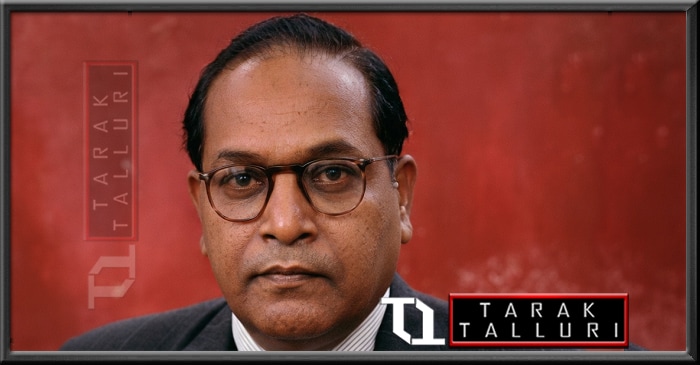
Dr B R Ambedkar introduced the Indian Trade Unions Amendment Bill 1943.
On 8 November 1943, Dr. B. R. Ambedkar, serving as Labour Member of the Viceroy's Executive Council, introduced the Indian Trade Unions (Amendment) Bill in the Central Legislative Assembly.
The Bill proposed compulsory recognition of qualifying trade unions by employers, aiming to strengthen workers' collective representation and establish legal safeguards against unjustified refusal of recognition.
Historical Background of the Indian Trade Unions Amendment Bill 1943
Before Indian independence, industrial workers faced significant challenges in organizing themselves and negotiating with employers.
The expansion of factories, railways, mines, plantations, and other industries contributed to the growth of organized labour.
Trade unions emerged to represent workers in disputes concerning wages, working conditions, employment security, and industrial relations.
However, employers were not generally required to recognize trade unions merely because they were legally registered.
This created difficulties for workers attempting to negotiate collectively through their organizations.
The Indian Trade Unions Act, 1926, provided a legal framework for trade union registration and certain protections, but registration did not automatically establish an enforceable right to recognition by employers.
The need for stronger legal recognition became an important subject of labour policy discussions.
Dr. B. R. Ambedkar as Labour Member
Dr. Bhimrao Ramji Ambedkar served as Labour Member of the Viceroy's Executive Council from 1942 to 1946.
During this period, he participated in formulating labour policy and introducing legislative proposals concerning industrial employment and workers' welfare.
His responsibilities included issues relating to industrial relations, labour conditions, employment, and social protection.
The Indian Trade Unions Amendment Bill 1943, formed part of these efforts to improve the legal position of organized labour.
Ambedkar sought to move trade union recognition beyond voluntary acceptance by employers toward a system governed by statutory requirements.
Introduction of the Indian Trade Unions Amendment Bill 1943 on 8 November
On 8 November 1943, Dr. B. R. Ambedkar formally introduced the Indian Trade Unions Amendment Bill 1943 in the Central Legislative Assembly.
The Indian Trade Unions Amendment Bill 1943 proposed amendments to the Indian Trade Unions Act, 1926.
Ambedkar requested permission to introduce the legislation, and the Assembly granted leave.
The introduction was recorded in the official Legislative Assembly Debates, Central, Volume IV of 1943, page 30.
The proposed legislation addressed one of the central difficulties faced by organized labour: employers' refusal to recognize trade unions as representatives of workers.
It sought to establish a legal framework under which qualifying trade unions could claim recognition.
Main Objectives of the Indian Trade Unions Amendment Bill 1943
The Indian Trade Unions Amendment Bill 1943 proposed three principal reforms.
1. Compulsory Recognition of Trade Unions
The first objective was to require employers to recognize trade unions that satisfied prescribed statutory conditions.
The proposal was intended to reduce reliance on voluntary employer recognition and strengthen formal representation for organized workers.
2. Conditions for Trade Union Recognition
The second objective was to establish legal conditions that trade unions would need to satisfy before becoming eligible for compulsory recognition.
These requirements were intended to determine whether a union qualified for recognition under the proposed framework.
Recognition was therefore not intended to be automatic for every registered trade union.
3. Legal Penalties for Refusal of Recognition
The third objective was to make an employer's refusal to recognize a qualifying trade union a punishable offence.
The proposal would give statutory force to recognition requirements rather than leaving compliance entirely to the employer's discretion.
These three provisions formed the central structure of the proposed reform.
Ambedkar's Speech on 13 November 1943
On 13 November 1943, Ambedkar moved that the Indian Trade Unions Amendment Bill 1943 be circulated to obtain public opinion.
During the debate, he explained that the proposed legislation sought to make recognition compulsory for employers while establishing conditions that trade unions would need to meet.
He also explained the proposal to penalize refusal of recognition when a trade union had fulfilled the prescribed requirements.
Ambedkar emphasized that the provisions were not necessarily final.
The government intended to consider the opinions of labour leaders, employers, provincial governments, and other interested parties before finalizing the legislation.
The debate therefore formed part of a consultative legislative process.
Why Was Compulsory Recognition Important?
Trade union recognition is important because it determines whether an employer formally accepts a union as a representative of workers.
Without recognition, a registered trade union may face difficulty participating in collective negotiations with management.
The proposed compulsory recognition system was intended to provide a stronger legal basis for organized representation.
It could also help establish clearer procedures for relations between employers and qualifying unions.
The proposal reflected growing recognition of the need for formal industrial relations mechanisms in British India.
The Difference Between Trade Union Registration and Recognition
Trade union registration and trade union recognition are distinct legal concepts.
Trade union registration establishes the legal status of an organization under the relevant legislation and may provide certain statutory protections.
Trade union recognition concerns the acceptance of a union as a representative organization for purposes such as industrial negotiations.
The Indian Trade Unions Act, 1926, primarily addressed registration and associated legal matters.
Ambedkar's 1943 amendment proposal sought to address the separate problem of recognition.
This distinction was central to the purpose of the Indian Trade Unions Amendment Bill 1943.
Employer and Worker Responses
The proposal for compulsory recognition prompted debate between employers' organizations and workers' representatives.
Employers expressed concerns about introducing legal compulsion into industrial relations and generally preferred voluntary cooperation.
Workers' representatives supported compulsory recognition and argued that stronger statutory protections were necessary.
The competing positions were considered through labour conferences and advisory discussions.
At a Standing Labour Committee meeting held on 27 June 1944, representatives discussed compulsory recognition and the conditions under which trade unions should qualify.
The discussions demonstrated that the proposal remained an active subject of labour policy debate after its introduction.
What Happened to the Indian Trade Unions Amendment Bill 1943?
The Indian Trade Unions Amendment Bill 1943 introduced in November 1943 did not immediately become law.
After the proposal was circulated and discussed, the government continued consulting provincial authorities and representatives of employers and workers.
The original Bill was ultimately allowed to lapse.
This outcome was explicitly acknowledged in subsequent Legislative Assembly proceedings in October 1946.
A revised Indian Trade Unions Amendment Bill 1943 was later brought before the legislature.
Therefore, the 1943 event should be identified as the introduction of a proposed legislative amendment, not the enactment of compulsory trade union recognition.
Subsequent Legislative Developments
The question of compulsory trade union recognition continued after the original proposal lapsed.
A revised amendment Bill was considered in 1946 under Labour Member Jagjivan Ram.
The later legislative discussions reflected the continuing difficulty of establishing an agreed framework for compulsory recognition.
The issue remained part of the broader development of industrial relations legislation in India.
The historical importance of Ambedkar's 1943 initiative lies in its attempt to establish statutory recognition as an enforceable legal principle.
Dr. B. R. Ambedkar's Contribution to Labour Rights
Ambedkar's work as Labour Member extended beyond the trade union recognition proposal.
His tenure involved labour welfare policy, employment conditions, industrial relations, and measures addressing the circumstances of working people.
He participated in legislative and administrative efforts concerning working hours, labour protections, employment services, and workers' welfare.
His proposals reflected an approach that combined legal reform with institutional measures for improving labour conditions.
The Indian Trade Unions (Amendment) Bill, 1943, was one example of this broader labour policy activity.
Historical Significance of the 1943 Bill
The introduction of the Indian Trade Unions (Amendment) Bill on 8 November 1943 was an important development in the history of Indian industrial relations.
The proposal attempted to establish a legal obligation for employers to recognize qualifying trade unions.
It also sought to define the conditions of recognition and provide penalties for unjustified refusal.
Although the original Bill did not become law, the debates surrounding it contributed to the historical development of ideas about collective representation and statutory trade union recognition.
The event illustrates Ambedkar's involvement in legislative efforts to strengthen workers' position within industrial relations.
Major Historical Milestones
- 1926: The Indian Trade Unions Act established a statutory framework for trade union registration.
- 1942: Dr. B. R. Ambedkar became Labour Member of the Viceroy's Executive Council.
- 8 November 1943: Ambedkar introduced the Indian Trade Unions Amendment Bill 1943 in the Central Legislative Assembly.
- 13 November 1943: Ambedkar moved to circulate the Bill for public opinion.
- 27 June 1944: The Standing Labour Committee discussed compulsory trade union recognition.
- 1946: A revised amendment Bill was considered after the original proposal had lapsed.
Conclusion
On 8 November 1943, Dr. B. R. Ambedkar introduced the Indian Trade Unions Amendment Bill 1943 to address the absence of compulsory employer recognition for qualifying trade unions.
Serving as Labour Member of the Viceroy's Executive Council, he proposed statutory recognition requirements, eligibility conditions, and penalties for refusal.
Although the original Bill did not become law, its introduction marked an important stage in the history of Indian labour legislation, trade union rights, and collective worker representation.
References
- Government of India – Dr. Babasaheb Ambedkar: Writings and Speeches, Volume 10 (Official Primary Source)
https://drambedkarwritings.gov.in/upload/uploadfiles/files/Volume_10.pdf - Dr. Babasaheb Ambedkar: Writings and Speeches – Introduction of the Indian Trade Unions (Amendment) Bill, 8 November 1943
https://baws.in/books/baws/EN/Volume_10/pdf/701 - Dr. Babasaheb Ambedkar: Writings and Speeches – The Indian Trade Unions (Amendment) Bill, 13 November 1943
https://baws.in/books/baws/EN/Volume_10/pdf/131 - Dr. Babasaheb Ambedkar: Writings and Speeches – Standing Labour Committee Discusses Recognition of Trade Unions, June 1944
https://baws.in/books/baws/EN/Volume_10/pdf/195 - Jagjivan Ram Foundation – Parliamentary Speeches: Indian Trade Unions (Amendment) Bill, October 1946
https://jagjivanramfoundation.nic.in/pdf/Speeches%20in%20Parliament/JAGJIVAN%20RAM-PUB-1.pdf
Also Read : Ramabai Ambedkar