

Date
- Date
- 14 Nov 2026
Time
- Time
- ...

National Children's Day - India
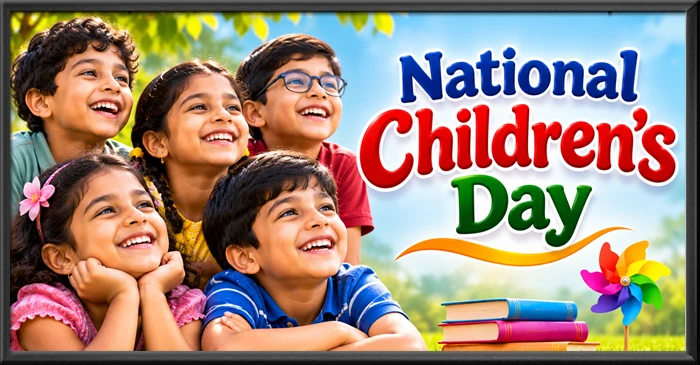
National Children's Day also known as Bal Diwas, is observed annually on 14 November.
The observance commemorates the birth anniversary of India's first Prime Minister, Jawaharlal Nehru (1889–1964).
Celebrated during Nehru's lifetime, with documented observances in 1957, it promotes children's rights, education, welfare, development, and opportunities for a better future.
National Children's Day - India: History, Origin and Significance
National Children's Day is observed annually on 14 November in India to celebrate childhood and promote children's rights, education, welfare, and development. Also known as Bal Diwas, the observance coincides with the birth anniversary of Jawaharlal Nehru (1889–1964), India's first Prime Minister.
The occasion highlights the importance of protecting children, providing quality education, improving healthcare, and creating equal opportunities for their growth and development.
National Children's Day is celebrated in schools, educational institutions, and communities throughout India.
History and Origin of National Children's Day
The origins of National Children's Day in India are closely associated with the international children's welfare movement and Jawaharlal Nehru's birthday.
On 14 December 1954, the United Nations General Assembly adopted Resolution 836(IX), recommending that countries establish a Universal Children's Day dedicated to children's welfare, international understanding, and friendship.
Countries were permitted to select appropriate dates for their national observances.
In India, 14 November became associated with Children's Day during Jawaharlal Nehru's lifetime.
Historical correspondence from November 1957 records the involvement of the Indian Council for Child Welfare in securing 14 November for the observance.
The date coincided with Nehru's birthday, contributing to his lasting association with National Children's Day.
When Was National Children's Day First Celebrated in India?
National Children's Day was celebrated in India before Jawaharlal Nehru's death in 1964.
One of the earliest directly documented major celebrations took place on 14 November 1957 at the National Stadium in New Delhi.
More than 100,000 children reportedly attended the event, where Nehru delivered a special address.
His speech emphasised children's happiness, education, personal development, courage, and responsibility towards the country's future.
A note dated 13 November 1957 also shows that Nehru opposed treating the occasion primarily as a personal birthday celebration.
These original historical documents establish that Children's Day was observed on 14 November during his lifetime.
Although the 1957 celebration is firmly documented, the exact year of the first nationwide celebration has not been conclusively established.
Therefore, the frequently repeated claim that National Children's Day was first established in 1964 is historically inaccurate.
Why Is National Children's Day Celebrated on November 14?
National Children's Day is celebrated on 14 November because the date marks the birth anniversary of Jawaharlal Nehru, India's first Prime Minister.
Nehru was born on 14 November 1889 in Allahabad, now Prayagraj, Uttar Pradesh.
He served as India's first Prime Minister from 15 August 1947 until his death on 27 May 1964.
Nehru placed considerable importance on education, scientific development, and the role of young people in building modern India.
His public association with children's welfare and education contributed to the continuing tradition of observing National Children's Day on his birthday.
Jawaharlal Nehru and National Children's-Day
Jawaharlal Nehru was affectionately known as Chacha Nehru, meaning Uncle Nehru.
His public appearances with children, speeches about education, and emphasis on young people's development became important aspects of his political and social legacy.
Nehru encouraged children to develop curiosity, creativity, courage, discipline, and a sense of responsibility.
During the Children's Day celebration on 14 November 1957, he urged children to read, write, play, dance, sing, and enjoy their childhood.
He also emphasised that the country's future would be shaped by its younger generations.
However, Nehru did not want Children's Day to become merely a celebration of his personal achievements.
His correspondence shows that he preferred the occasion to focus on children themselves.
Who Established National Children's Day in India?
The establishment of National Children's Day cannot be reliably attributed to one individual through the historical sources examined.
The observance developed in connection with children's welfare initiatives, the international Children's Day movement, and the work of organisations such as the Indian Council for Child Welfare.
Historical correspondence identifies Rajkumari Amrit Kaur, Chairperson of the Indian Council for Child Welfare, as an important figure in discussions concerning the selection of 14 November.
The day subsequently became strongly associated with Jawaharlal Nehru because it coincided with his birthday.
Thus, Nehru is the principal historical personality honoured by the observance, rather than a conclusively established sole founder.
Objectives of National Children's Day
The principal objectives of National Children's Day include:
- Promoting children's rights and well-being.
- Encouraging access to quality education.
- Supporting children's physical and mental development.
- Raising awareness about child protection and safety.
- Highlighting the importance of healthcare and nutrition.
- Encouraging creativity, learning, and participation.
- Promoting equal opportunities for children.
- Addressing discrimination, child labour, exploitation, and violence against children.
- Recognising children's achievements and talents.
- Encouraging society to prioritise children's needs and development.
These objectives reflect the broader importance of creating safe, inclusive, and supportive environments for children.
How Is National Children's Day Celebrated in India?
National Children's Day is celebrated through educational, cultural, recreational, and community activities.
Schools and educational institutions frequently organise special programmes to recognise children's talents and encourage their participation.
Common celebrations include:
- Cultural performances and music programmes.
- Sports competitions and recreational activities.
- Drawing and painting competitions.
- Essay-writing and storytelling events.
- Educational workshops and exhibitions.
- Activities promoting children's rights.
- Community programmes supporting disadvantaged children.
- Recognition of academic, artistic, and sporting achievements.
Teachers, parents, educational institutions, government organisations, and voluntary groups participate in activities dedicated to children's welfare.
National Children's Day and Children's Rights in India
National Children's Day serves as an occasion to highlight the importance of children's fundamental rights.
Children require access to education, healthcare, nutrition, protection, and opportunities for healthy development.
In India, several constitutional and legal provisions support children's welfare.
Article 21A of the Indian Constitution provides for free and compulsory education for children between six and fourteen years of age.
The Right of Children to Free and Compulsory Education Act, 2009, provides a legal framework for implementing this constitutional entitlement.
Other child protection laws address issues such as child labour, exploitation, abuse, and harmful practices affecting children.
National Children's Day provides an opportunity to promote awareness of these protections and the continuing need to improve children's living conditions.
National Children's Day vs World Children's Day
National Children's Day in India and World Children's Day are two distinct observances.
National Children's Day – India
Date: 14 November
Location: India
Also known as: Bal Diwas
Historical association: Birth anniversary of Jawaharlal Nehru.
Purpose: Celebrating children and promoting their rights, welfare, education, and development.
World Children's Day
Date: 20 November
Location: Worldwide
Established internationally: The United Nations recommended Universal Children's Day in 1954.
The date 20 November commemorates two important milestones in the history of children's rights:
- 20 November 1959: Adoption of the Declaration of the Rights of the Child.
- 20 November 1989: Adoption of the Convention on the Rights of the Child.
World Children's Day promotes children's rights, participation, protection, and well-being at the international level.
Both observances share a commitment to children's welfare, but their dates and historical backgrounds differ.
Significance of National Children's Day in India
National Children's Day highlights the importance of investing in children's education, health, security, and future opportunities.
The observance encourages society to recognise children as individuals with rights, aspirations, talents, and the capacity to shape the future.
It also provides an opportunity to draw attention to challenges such as poverty, inadequate education, malnutrition, child labour, and unequal access to essential services.
National Children's Day reminds families, educators, policymakers, and communities of their shared responsibility to provide children with a safe and supportive environment.
Historical Significance and Legacy
National Children's Day represents an enduring tradition of celebrating children and promoting their welfare in India.
Its observance on 14 November connects the international movement for children's welfare with the historical legacy of Jawaharlal Nehru.
Primary historical records demonstrate that the occasion was celebrated during Nehru's lifetime, including the major gathering held in New Delhi on 14 November 1957.
The association with Nehru's birthday continued after his death in 1964.
Today, National Children's Day remains an important annual observance dedicated to the rights, education, welfare, and development of children throughout India.
References
- UNICEF India – World Children's Day (Confirms National Children's Day on November 14)
https://www.unicef.org/india/campaigns/world-childrens-day - The Nehru Archive – Observance of Children's Day, 13 November 1957
https://nehruarchive.in/documents/observance-of-childrens-day-13-november-1957-yqz79 - The Nehru Archive – Advice to Children, 14 November 1957
https://nehruarchive.in/documents/advice-to-children-14-november-1957-3qe2l - Prime Minister's Office, Government of India – Jawaharlal Nehru Biography
https://www.pmindia.gov.in/en/former_pm/shri-jawaharlal-nehru/ - United Nations – World Children's Day: Historical Background
https://www.un.org/en/observances/world-childrens-day/background
Also Read : Potti Sreeramulu