

Date
- Date
- 1 Jul 2027
Time
- Time
- ...

Van Mahotsav - India
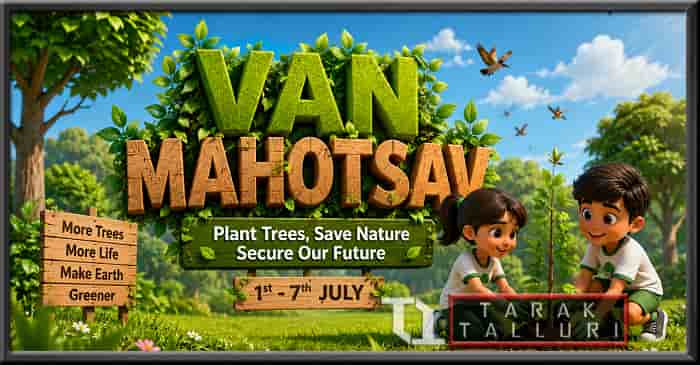
Van Mahotsav is observed annually from 1 to 7 July across India to promote tree planting and forest conservation.
Founded in 1950 by K. M. Munshi, the festival developed from a national tree-planting initiative organised by M. S. Randhawa in 1947.
It encourages environmental awareness, biodiversity protection, and community participation in afforestation.
Van Mahotsav – History, Founder, Dates, Objectives and Significance
Van Mahotsav, also known as the Festival of Trees or Forest Festival, is an annual tree-planting festival celebrated from 1 to 7 July across India to promote afforestation, forest conservation, biodiversity protection, and environmental awareness.
The festival was established in 1950 by Kanhaiyalal Maneklal Munshi (K. M. Munshi), the then Union Minister for Food and Agriculture, to encourage public participation in planting trees and protecting forests.
Van Mahotsav is celebrated during the monsoon season, when rainfall generally provides favourable conditions for planting saplings in many parts of India.
The festival encourages individuals, educational institutions, government departments, environmental organisations, and local communities to participate in tree-planting drives and conservation activities.
History of Van Mahotsav
The history of Van Mahotsav dates back to India's early efforts to promote organised tree planting and forest conservation.
1947 – First National Tree Plantation Week
The first Indian national tree-planting week was organised from 20 to 27 July 1947 by Mohinder Singh Randhawa (M. S. Randhawa), an Indian civil servant, historian, and botanist.
The programme began in Delhi on 20 July 1947.
The inaugural activities included the planting of Bauhinia saplings by Delhi Commissioner Khurshid Ahmad Khan.
Jawaharlal Nehru, then Vice-President of India's Interim Government, also participated in a tree-planting ceremony at Purana Qila in Delhi.
The initiative encouraged public participation in planting trees and created a foundation for future nationwide afforestation campaigns.
1950 – Establishment of Van Mahotsav
In 1950, K. M. Munshi transformed the earlier tree-planting initiative into a national festival called Van-Mahotsav.
He shifted the celebration to the first week of July, from 1 to 7 July, to coincide with the beginning of the monsoon season in many regions of India.
The initiative aimed to encourage people to plant trees, develop awareness about forest conservation, and recognise the environmental importance of greenery.
Van-Mahotsav subsequently developed into an annual national tree-planting movement involving public institutions, schools, communities, and environmental organisations.
Who Founded Van Mahotsav?
Kanhaiyalal Maneklal Munshi (K. M. Munshi) founded Van Mahotsav in 1950 while serving as India's Union Minister for Food and Agriculture.
Munshi was an Indian independence activist, politician, writer, lawyer, and environmental conservation advocate.
He believed that public participation was essential for increasing tree cover and protecting natural resources.
Through Van-Mahotsav, he sought to encourage tree planting as a collective national responsibility.
Although M. S. Randhawa organised the earlier national tree-planting week in 1947, K. M. Munshi is recognised as the founder of Van Mahotsav in its established form.
Why Is Van Mahotsav Celebrated in July?
Van Mahotsav is traditionally celebrated during the first week of July because this period coincides with the southwest monsoon season in many parts of India.
Rainfall provides moisture that supports the establishment and growth of newly planted saplings.
Planting trees during suitable rainy conditions can reduce the need for frequent artificial watering and improve survival rates.
However, rainfall patterns vary across India. Therefore, some regions organise Van-Mahotsav plantation activities on different dates according to local monsoon conditions.
Objectives of Van Mahotsav
The primary objectives of Van Mahotsav include:
- Promoting tree planting and afforestation across India.
- Raising public awareness about forest conservation.
- Encouraging the protection of biodiversity and natural habitats.
- Reducing environmental degradation caused by deforestation.
- Promoting community participation in environmental protection.
- Educating students about the ecological importance of trees.
- Encouraging the planting and conservation of suitable native tree species.
- Supporting soil conservation and the protection of water resources.
- Promoting long-term care and maintenance of planted saplings.
- Creating awareness about sustainable environmental practices.
How Is Van Mahotsav Celebrated?
Van-Mahotsav is celebrated through environmental awareness programmes and tree-planting activities organised by government departments, schools, colleges, local communities, and conservation organisations.
Tree Plantation Drives
Forest departments, municipal authorities, educational institutions, and volunteer groups organise tree-planting programmes in suitable locations.
These activities encourage individuals to participate directly in environmental conservation.
School and College Activities
Educational institutions organise environmental awareness programmes, essay competitions, drawing contests, seminars, and tree-planting campaigns.
Students learn about deforestation, biodiversity, climate change, and the importance of protecting trees.
Environmental Awareness Campaigns
Government agencies and environmental organisations conduct campaigns highlighting the ecological value of forests and the consequences of habitat destruction.
Distribution of Saplings
Forest departments, local authorities, and conservation organisations may distribute saplings to individuals, schools, and communities.
The distribution of suitable native species encourages greater participation in plantation programmes.
Community Conservation Activities
Local communities and volunteers participate in maintaining planted trees, protecting green spaces, and raising awareness about sustainable environmental practices.
Importance of Trees and Forests
Trees and forests play an essential role in maintaining environmental balance and supporting life on Earth.
Climate Regulation
Trees absorb carbon dioxide through photosynthesis and store carbon in their biomass.
Forests contribute to climate regulation and help moderate local environmental conditions.
Oxygen Production
Through photosynthesis, trees release oxygen while converting sunlight, water, and carbon dioxide into energy-rich compounds.
Biodiversity Conservation
Forests provide habitats for numerous species of mammals, birds, insects, reptiles, fungi, and other organisms.
Protecting forests helps conserve biodiversity and maintain ecological relationships.
Soil Conservation
Tree roots help stabilise soil, while vegetation and leaf litter reduce the impact of rainfall on exposed ground.
These processes can help reduce soil erosion.
Water Conservation
Forests contribute to water cycling, rainfall interception, groundwater recharge under suitable conditions, and watershed protection.
Human Well-being
Trees provide shade, improve the quality of many urban environments, and create green spaces for recreation and well-being.
Van Mahotsav highlights these ecological and social benefits while encouraging responsible environmental stewardship.
Importance of Native Trees in Van Mahotsav
Planting suitable native tree species is an important aspect of effective afforestation.
Native species are generally better adapted to local environmental conditions and can support local wildlife and ecological relationships.
Depending on the region and habitat, tree-planting programmes may include indigenous species such as neem, banyan, peepal, jamun, and other locally appropriate trees.
However, species selection should be based on local ecology, soil, rainfall, water availability, and the suitability of the planting site.
Planting trees in unsuitable ecosystems, including natural grasslands, can negatively affect existing biodiversity.
Successful conservation therefore requires appropriate species selection, careful site planning, and long-term maintenance.
Role of Educational Institutions in Van Mahotsav
Schools, colleges, and universities play an important role in spreading environmental awareness during Van Mahotsav.
Students participate in tree-planting programmes, environmental workshops, biodiversity activities, and educational competitions.
These programmes help young people understand how forests support ecosystems and why protecting natural resources is important.
Environmental education also encourages individuals to adopt responsible practices such as reducing waste, conserving water, and protecting existing trees.
Van Mahotsav and Environmental Conservation in India
Van Mahotsav forms part of India's broader efforts to promote afforestation and public participation in environmental protection.
The festival complements conservation initiatives undertaken by forest departments, environmental organisations, research institutions, and local communities.
Tree planting can contribute to ecological restoration when appropriate species are planted in suitable locations.
However, planting saplings alone does not guarantee successful afforestation.
Long-term results depend on sapling survival, adequate maintenance, water availability, protection from damage, and conservation of existing natural habitats.
Van Mahotsav therefore provides an opportunity to promote both tree planting and responsible forest management.
Significance of Van Mahotsav
The significance of Van Mahotsav lies in its promotion of environmental responsibility and collective participation in forest conservation.
The festival encourages citizens to recognise the importance of trees in maintaining biodiversity, supporting ecosystems, protecting soil, and regulating environmental conditions.
It also highlights the relationship between forests and human well-being.
By involving schools, communities, government agencies, and conservation organisations, Van Mahotsav helps strengthen public awareness about environmental protection.
The observance represents India's continuing commitment to preserving its natural heritage through public participation.
Conclusion
Van Mahotsav, celebrated annually from 1 to 7 July, is an important tree-planting and forest conservation festival in India.
Established in 1950 by K. M. Munshi, the festival developed from an earlier national tree-planting initiative organised by M. S. Randhawa in 1947.
Through plantation drives, educational programmes, and community participation, Van Mahotsav promotes environmental awareness, biodiversity conservation, and the long-term protection of forests.
The festival reminds individuals and communities that protecting existing trees and caring for newly planted saplings are essential responsibilities in preserving India's natural environment.
Frequently Asked Questions
When is Van Mahotsav celebrated?
Van Mahotsav is traditionally celebrated annually from 1 to 7 July across India. Some regions organise related plantation activities at different times according to local monsoon conditions.
Who founded Van Mahotsav?
K. M. Munshi, the then Union Minister for Food and Agriculture, founded Van Mahotsav in 1950.
When was Van Mahotsav first celebrated?
Van Mahotsav in its established form began in 1950. Its historical precursor was the national tree-planting week organised by M. S. Randhawa from 20 to 27 July 1947.
What is the meaning of Van Mahotsav?
Van Mahotsav means Festival of Trees or Forest Festival.
Why is Van Mahotsav celebrated?
It is celebrated to promote tree planting, forest conservation, biodiversity protection, and public awareness about environmental sustainability.
Why is Van Mahotsav celebrated in the first week of July?
The first week of July coincides with monsoon conditions in many parts of India, providing favourable moisture for establishing tree saplings.
What are the main activities of Van Mahotsav?
Activities include tree-planting drives, sapling distribution, environmental awareness campaigns, school competitions, seminars, and community conservation programmes.
What is the difference between Van Mahotsav and World Environment Day?
Van Mahotsav is an Indian tree-planting festival traditionally celebrated from 1 to 7 July. World Environment Day is a United Nations observance celebrated globally on 5 June.
References
- Press Information Bureau, Government of India – Van-Mahotsav: A Commitment to Green India (2024)
https://www.pib.gov.in/PressNoteDetails.aspx?ModuleId=3&NoteId=151913 - Press Information Bureau, Government of India – Environment Minister to Lead Plantation Drive to Celebrate Van-Mahotsav (2017)
https://www.pib.gov.in/PressReleasePage.aspx?PRID=1494477&lang=1®=3 - Press Information Bureau, Government of India – Van-Mahotsav (2008)
https://www.pib.gov.in/newsite/erelcontent.aspx?lang=2®=48&relid=40550 - Indian Council of Agricultural Research – Van Mahotsab Celebrated at ICAR-IIPR, Kanpur
https://icar.org.in/node/10327 - KIRAN, Indian Council of Agricultural Research – Van-Mahotsav: The Festival of Life
https://kiran.nic.in/Van_Mahotsav.html - The Nehru Archive – Importance of Afforestation, 30 May 1958
https://nehruarchive.in/documents/importance-of-afforestation-30-may-1958-m8wez
Also Read : Ritika Singh