

Date
- Date
- 11 Nov 2026
Time
- Time
- ...
Angola Independence Day
Angola Independence Day is observed annually on November 11.
The national holiday commemorates Angola's independence from Portuguese colonial rule on November 11, 1975.
Agostinho Neto proclaimed independence in Luanda and became the country's first president.
The observance honours Angola's liberation struggle, national sovereignty, cultural identity, and the sacrifices made for independence.
Angola Independence Day – History, Freedom Struggle and Significance
Angola Independence Day, officially known as National Independence Day (Dia da Independência Nacional), is observed annually on November 11 to commemorate Angola's independence from Portuguese colonial rule in 1975.
On November 11, 1975, António Agostinho Neto proclaimed Angola's independence in Luanda, marking the establishment of a sovereign Angolan state after centuries of Portuguese colonial influence and rule.
Neto became the first President of Angola. The occasion commemorates the long struggle for national liberation and honours the people who contributed to the country's independence.
History of Angola Independence Day
The history of Angola Independence Day is connected to Portuguese colonial expansion, African resistance movements, the struggle for national liberation, and political developments during the twentieth century.
Portuguese Arrival and Colonial Rule
Portuguese contact with the region began in the late fifteenth century.
In 1482, the Portuguese navigator Diogo Cão reached the mouth of the Congo River, beginning a period of sustained contact between Portugal and the kingdoms of Central Africa.
Before Portuguese colonial expansion, the territory of present-day Angola included established African political entities, including the Kingdom of Kongo, Ndongo, Matamba, and Lunda.
Portuguese involvement expanded through trade, missionary activities, military campaigns, and colonial settlement.
The region became deeply affected by the transatlantic slave trade, while African rulers and communities resisted foreign domination.
Queen Njinga Mbande, a seventeenth-century ruler associated with Ndongo and Matamba, became an important historical figure in resistance to Portuguese expansion.
Over several centuries, Portuguese colonial administration expanded across the territory that eventually became modern Angola.
Rise of the Angolan Independence Movement
During the twentieth century, Angolan nationalist movements increasingly challenged Portuguese colonial rule.
Political organisations emerged to demand independence, national self-determination, and an end to colonial discrimination.
The armed struggle for national liberation began in 1961.
February 4, 1961, is officially commemorated in Angola as the beginning of the armed liberation struggle.
The conflict continued for more than a decade, involving several nationalist organisations with different political positions and regional support bases.
Major Liberation Movements in Angola
Three major organisations played important roles in Angola's struggle for independence.
1. Popular Movement for the Liberation of Angola (MPLA)
The Popular Movement for the Liberation of Angola, known as the MPLA, became one of the principal organisations fighting Portuguese colonial rule.
Agostinho Neto emerged as its leading figure.
The movement eventually established control of Luanda and proclaimed the independent People's Republic of Angola in November 1975.
2. National Front for the Liberation of Angola (FNLA)
The National Front for the Liberation of Angola, or FNLA, was led by Holden Roberto.
The movement maintained an important support base in northern Angola and participated in the struggle against Portuguese rule.
3. National Union for the Total Independence of Angola (UNITA)
The National Union for the Total Independence of Angola, known as UNITA, was established in 1966 under Jonas Savimbi.
It became another major nationalist organisation and subsequently a principal participant in the civil war following independence.
Although these movements opposed Portuguese colonial rule, their political differences and rivalry contributed to serious conflict during the transition to independence.
Portugal's Carnation Revolution – 1974
A major turning point occurred on April 25, 1974, when Portugal experienced the Carnation Revolution.
The military-led revolution overthrew Portugal's authoritarian government and opened the way for democratic reforms and decolonisation.
Portugal's new authorities began negotiations concerning independence for its African colonies.
These developments accelerated Angola's transition toward sovereignty.
Alvor Agreement – January 15, 1975
On January 15, 1975, Portugal and Angola's three principal liberation movements signed the Alvor Agreement in Alvor, Portugal.
The agreement recognised Angola's right to independence and established a framework for a transitional government.
It formally scheduled independence for November 11, 1975.
The agreement was signed by representatives of Portugal, the MPLA, FNLA, and UNITA.
However, political and military disagreements undermined the proposed power-sharing arrangements.
Fighting intensified among the rival movements, and the transitional process broke down before independence.
Angola Declared Independence – November 11, 1975
On November 11, 1975, Angola formally became independent from Portugal.
During the early hours of the day, Agostinho Neto proclaimed independence in Luanda on behalf of the MPLA-led authorities.
The proclamation established the People's Republic of Angola, with Neto becoming the country's first president.
The independence declaration ended Portugal's colonial sovereignty over Angola.
However, independence did not immediately bring political stability or peace.
Different nationalist movements continued competing for power, and Angola entered a prolonged civil conflict.
Who Founded Independent Angola?
Agostinho Neto is officially honoured in Angola as the Founder of the Nation and its first president.
He played a central role in the liberation movement and proclaimed independence on November 11, 1975.
Nevertheless, Angola's independence resulted from a wider national struggle involving multiple political organisations, resistance movements, community leaders, and ordinary citizens.
Important historical figures included:
- Agostinho Neto: MPLA leader and Angola's first president.
- Holden Roberto: Leader of the FNLA.
- Jonas Savimbi: Founder and leader of UNITA.
Their political differences became significant during the transition to independence and the subsequent civil war.
The historical achievement of independence should therefore be distinguished from the political conflicts that followed it.
Angolan Civil War and the Search for Peace
The Angolan Civil War developed during the transition to independence in 1975.
The conflict involved rival Angolan political and military organisations and became connected to wider Cold War rivalries.
Foreign governments supported different sides, contributing to the conflict's international dimensions.
Attempts to establish peace included the Bicesse Accords of 1991 and the Lusaka Protocol of 1994.
Although these agreements represented important diplomatic efforts, fighting continued.
The prolonged civil war ended in 2002, following a peace agreement on April 4.
Angola commemorates April 4 separately as the Day of Peace and National Reconciliation.
This distinction is important: November 11 commemorates independence from colonial rule, while April 4 commemorates the end of the civil conflict.
Angola's International Recognition
Following independence, Angola gradually established diplomatic relations and gained recognition from other countries.
Brazil was among the earliest countries to recognise the new Angolan government.
Angola joined the Organisation of African Unity on February 12, 1976.
On December 1, 1976, Angola was admitted to the United Nations as a member state.
These developments were important milestones in the country's participation in international diplomacy.
Why Is Angola Independence Day Celebrated on November 11?
November 11 marks the formal restoration of Angolan sovereignty through independence from Portugal in 1975.
The date was explicitly established in the Alvor Agreement as the scheduled day of independence.
It later became Angola's annual national independence holiday.
The occasion recognises the contributions and sacrifices of individuals and communities involved in the liberation struggle.
It also represents the establishment of Angola as an independent country with its own national institutions, flag, and government.
How Is Angola Independence Day Celebrated?
Angola Independence Day is a national public holiday marked through official ceremonies, cultural events, and community activities.
National Flag-Raising Ceremonies
The national flag is raised during official commemorations to honour Angola's sovereignty.
Presidential and Government Ceremonies
National leaders attend formal ceremonies and pay tribute to individuals who contributed to Angola's liberation.
Military and Civic Parades
Military units, civic organisations, and participating institutions may take part in commemorative parades.
Cultural Performances
Traditional music, dance, artistic presentations, and exhibitions celebrate Angola's cultural diversity.
Historical Exhibitions
Museums, educational institutions, and cultural organisations present exhibitions and programmes about colonial history, national liberation, and independence.
Tributes to Independence Leaders
Commemorative activities honour Agostinho Neto and other figures associated with the struggle for independence.
Community Celebrations
Families and communities participate in public gatherings and activities recognising the national holiday.
National Symbols of Angola
Angola's national symbols represent its history, liberation struggle, and aspirations for development.
National Flag
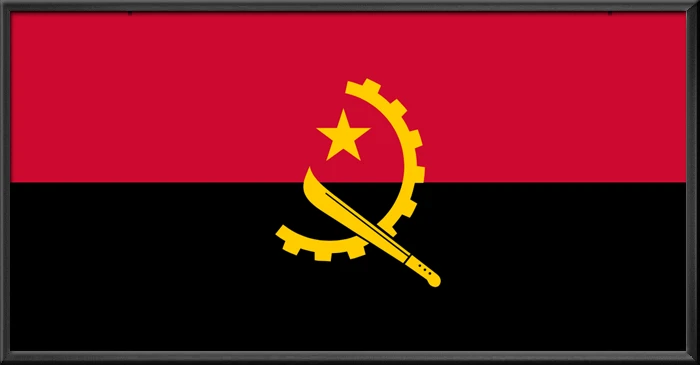
The Angolan national flag contains two horizontal bands, red above black.
The red represents the blood shed during colonial oppression, the liberation struggle, and the defence of the country.
The black represents the African continent.
At the centre are yellow symbols consisting of a partial cogwheel, a machete, and a star.
These represent workers and industrial production, peasants and agricultural production, the armed struggle, international solidarity, and progress.
The yellow colour represents the country's wealth.
National Anthem
Angola's national anthem, Angola Avante, is associated with the country's independence and national identity.
It is performed during official ceremonies and patriotic commemorations.
Objectives of Angola Independence Day
The principal objectives of Angola Independence Day are:
- Commemorate the restoration of national independence on November 11, 1975.
- Honour those who participated in the liberation struggle.
- Preserve the historical memory of resistance to colonial rule.
- Promote awareness of Angola's national heritage.
- Recognise the importance of sovereignty and self-determination.
- Encourage reflection on unity, peace, and reconciliation.
- Educate younger generations about the country's independence history.
- Celebrate Angola's cultural identity and national institutions.
Significance of Angola Independence Day
Angola Independence Day represents a defining moment in the country's modern history.
The declaration of independence ended Portuguese colonial sovereignty and established Angola as an independent African state.
The anniversary also commemorates the efforts of generations who resisted colonial domination and worked toward national self-determination.
From a historical perspective, the day provides an opportunity to examine both the achievements of independence and the political difficulties that followed.
Angola's transition from colonial rule to independence, its prolonged civil conflict, and its subsequent peace process form important parts of the country's national history.
The observance continues to connect national sovereignty with historical remembrance, cultural identity, and aspirations for peace and development.
Angola Independence Day and Peace Day – Difference
| Feature | Angola Independence Day | Peace and National Reconciliation Day |
|---|---|---|
| Date | November 11 | April 4 |
| Historical Event | Independence from Portugal | End of the civil war |
| Year | 1975 | 2002 |
| Main Significance | National sovereignty | Peace and reconciliation |
Both are important national observances, but they commemorate separate historical milestones.
Conclusion
Angola Independence Day is observed annually on November 11 to commemorate Angola's independence from Portugal in 1975.
Agostinho Neto proclaimed independence in Luanda and became the country's first president, following a prolonged liberation struggle.
Although independence was followed by a civil war that continued until 2002, November 11 remains a central date in Angola's national history.
The occasion honours the struggle for sovereignty, remembers the sacrifices made for freedom, and celebrates Angola's national identity and independence.
References
- Government of Angola – National Independence Day (Ministry of Territorial Administration)
https://mat.gov.ao/web/efemerides/5 - Embassy of Angola – History of Angola
https://www.angola.org/en/angola/historia - Government of Angola – Agostinho Neto's Proclamation of Independence
https://mat.gov.ao/web/noticias/proclamacao-da-independencia-nacional-representa-maior-feito-de-agostinho-neto-afirma-ministro-filipe-zau - Portuguese Official Gazette – Alvor Agreement, Signed January 15, 1975
https://diariodarepublica.pt/dr/detalhe/acordo/1975-319897 - United States Department of State, Office of the Historian – The Angola Crisis, 1974–1975
https://history.state.gov/milestones/1969-1976/angola - United Nations – Member States and Angola's Admission to the UN
https://www.un.org/about-us/member-states - Government of Angola – Historical Overview and National Symbols
https://www.angola50anos.gov.ao/pt/Historial-de-Angola - United Nations in Angola – History of the United Nations in Angola
https://angola.un.org/pt/about/about-the-un
Also Read : Argentina Independence Day